Arima Onsen: Where to Stay and Which Ryokan Have the Gold and Silver Water
This guide to Arima Onsen covers whether it is worth the trip, how to get there from Osaka, Kobe and Kyoto, what the Kin no Yu and Gin no Yu public baths cost, and which ryokan bathe in the gold and silver water. The town was first recorded in 631, when Emperor Jomei bathed there, and it counts as one of Japan's three ancient hot spring resorts.
About 60 minutes by highway bus from Osaka ($9, ¥1,400) and about 70 minutes from Kyoto ($12, ¥1,850).
The gold water (kinsen) is rich in iron and salt at 1.5 to 2 times the salt of seawater, and the silver water (ginsen) is a colourless carbonic and radium spring.
Kin no Yu costs $4 (¥650) on weekdays and Gin no Yu $3 (¥550), with a two-spa ticket at $8 (¥1,200).
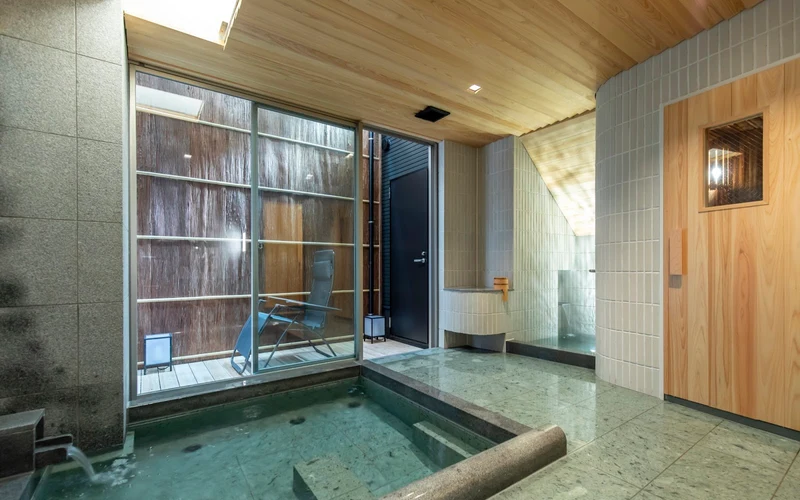
Arima Grand Hotel sells room types with open-air baths in either the gold or the silver spring.
Yes. Arima Onsen gives you two completely different thermal waters in one small town: an iron and salt spring that turns reddish brown in the air, and a colourless carbonated and radium spring. It is one of Japan's three ancient hot spring resorts, first recorded in 631 when Emperor Jomei bathed there. The town sits on the opposite, north side of Mt Rokko from central Kobe, and it is compact and walkable. It is a popular weekend getaway from Kobe and Osaka, and you can see the whole area in a day or stay overnight at one of the many inns.
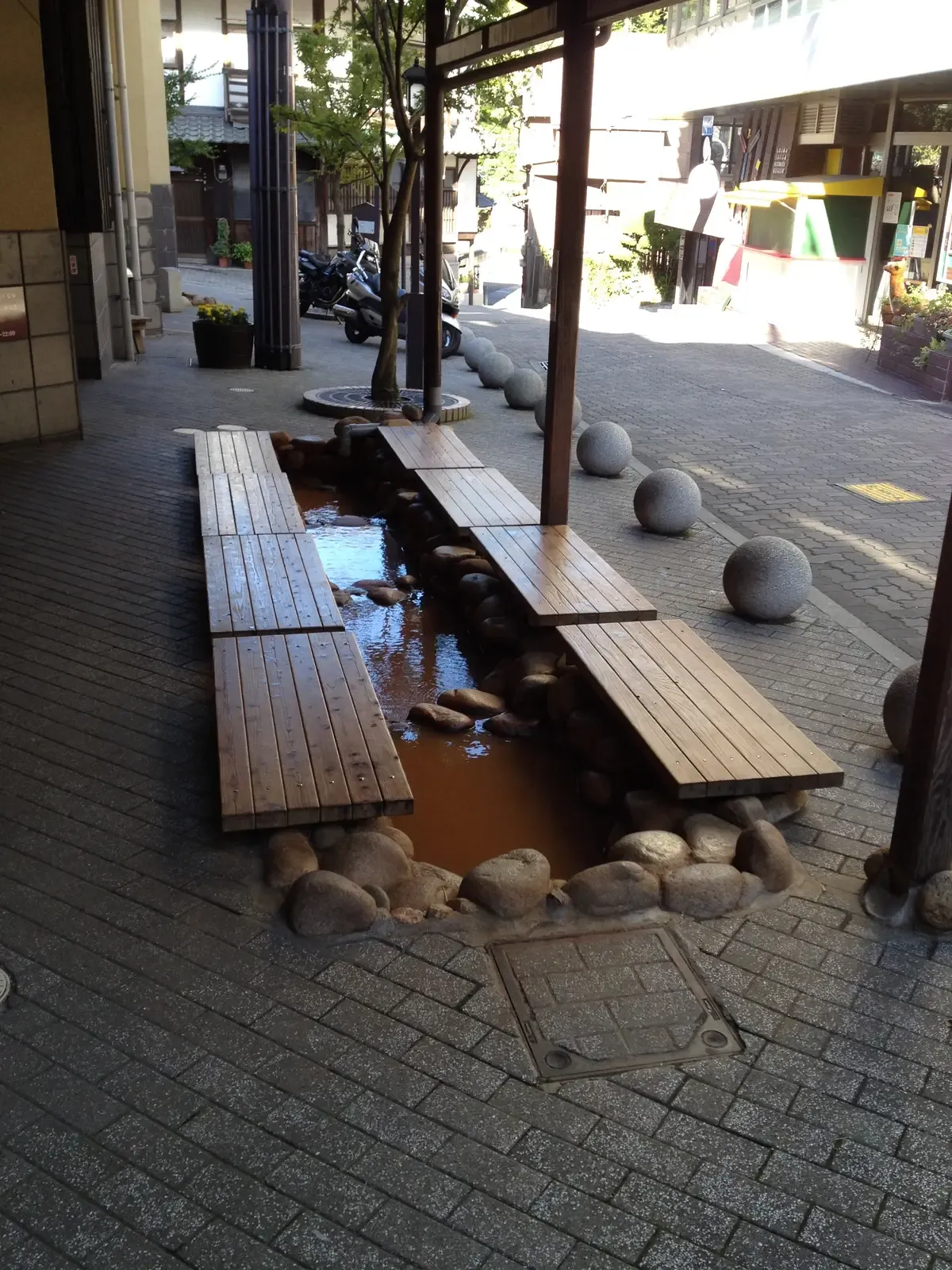
A free foot bath with the iron-rich gold water in the centre of town. Photo: VKaeru, CC BY-SA 3.0, via Wikimedia Commons
What Is the Difference Between Kinsen and Ginsen?
The kinsen, or gold water, is high in iron and salt, with a salt content 1.5 to 2 times that of seawater. It is odorless with a metallic taste and turns golden reddish brown on contact with air. The ginsen, or silver water, is colourless: a carbonated spring and a mildly radioactive radium spring.
Arima is far from any known volcano. The water is ancient seawater about six million years old, rising from about 60 km underground through seven sources, with modern drilling reaching 200 to 300 m. Temperatures range from a low-temperature carbonic mineral spring up to a hot spring of 208°F / 98°C. At Tosen Goshobo the source runs at 208°F / 98°C and the bath is controlled at 104°F / 40°C, with no added water or artificial heating. Gin no Yu advises water under 108°F / 42°C for people with high blood pressure or arteriosclerosis.
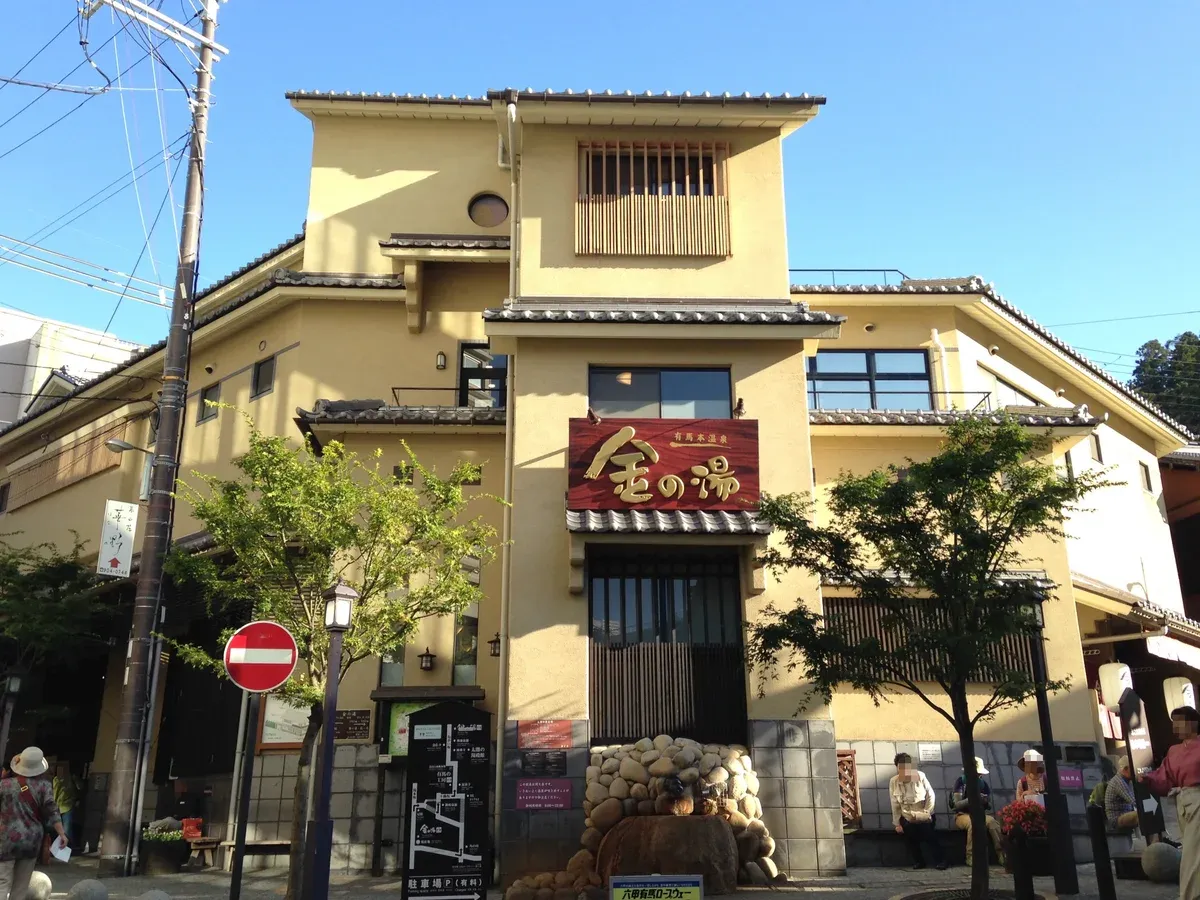
Kin no Yu, the public bath on the gold water. Photo: そらみみ, CC BY-SA 4.0, via Wikimedia Commons
How Much Does Arima Onsen Cost?
The public baths run from $3 (¥550) at Gin no Yu on weekdays to $17 (¥2,750) at Taiko no Yu, the large bath at Arima View Hotel. Dollar figures use 159 yen to the dollar. Both Kin no Yu and Gin no Yu are described as tattoo-friendly. Kin no Yu is open 8:00 to 22:00 with last entry at 21:30, closed the second and fourth Tuesday. Gin no Yu is open 9:00 to 21:00 with last entry at 20:30, closed the first and third Tuesday. Bring your own towel at Kin no Yu, where towels are sold on site, while Gin no Yu provides soap, shampoo and hairdryers.
The two-spa ticket covers both public bathhouses, and a ryokan day-use bath is the other option. The table lists entry, hours and closing days for each.
Bath
Water
Entry
Hours
Closed
Kin no Yu
Kinsen, gold, iron and salt
$4 (¥650) weekdays, $5 (¥800) otherwise
8:00-22:00, last entry 21:30
2nd and 4th Tuesday
Gin no Yu
Ginsen, carbonated radium spring
$3 (¥550) weekdays, $4 (¥700) otherwise
9:00-21:00, last entry 20:30
1st and 3rd Tuesday
2-Spa ticket
Both public bathhouses
$8 (¥1,200)
See both bathhouses
Both closing days
Taiko no Yu (Arima View Hotel)
26 baths over 7,000 sq m
$17 (¥2,750), $19 (¥2,970) weekends and holidays
10:00-22:00, last entry 21:00
not stated
Goshobo daytime bath
Kinsen from the inn's own sources
$14 (¥2,250)
11:00-14:00
Mondays
Is Arima Onsen Closer to Osaka or Kyoto?
Osaka. The highway bus from Osaka takes about 60 minutes and costs $9 (¥1,400), against about 70 minutes and $12 (¥1,850) from Kyoto Station. Buses from Osaka run one to two per hour, and the JR Pass is not valid on them.
From Kobe the trip is shorter still, and you can also arrive from above by ropeway down the north face of Mt Rokko.
From
Route
Time
Fare
Osaka (Hankyu Umeda / JR Osaka)
Highway bus
About 60 min
$9 (¥1,400)
Shin-Osaka
Highway bus
About 50 min
$8 (¥1,250)
Kobe Sannomiya
Subway to Tanigami, Shintetsu to Arima-guchi, Arima line train
30-40 min
$5 (¥720)
Kobe Sannomiya
Shinki bus
25 min
$4 (¥600)
Kyoto Station (Hachijo side)
Keihan/Hankyu highway bus, few per day
About 70 min
$12 (¥1,850) one way
Mt Rokko
Rokko Arima Ropeway down to Arima, linked by Rokko Cablecar and bus
Ropeway 12 min, cablecar 10 min
$9 (¥1,400) one way, $16 (¥2,520) round trip
Which Arima Onsen Ryokan Have the Gold and Silver Water?
The inns differ in which of the two waters they pipe, and whether you get it in your own room. Arima Grand Hotel and Taketoritei Maruyama offer both, Hyoe Koyokaku and Tosen Goshobo run on the gold water, and Gekkoen Yugetsusanso draws from its own source on the grounds.
Book a room with the water you want, because room types within the same inn can differ.
Own source on the grounds with water flowing freely, kinsen or ginsen not named on its own page
Some rooms with open-air bath
Official page is in Japanese, no day use mentioned
Can You Do Arima Onsen as a Day Trip?
Yes. Bath admission generally runs from $3 to $19 (¥550 to ¥3,000), and the town is small enough to walk between the two public bathhouses, the shops and the foot baths in a day. Hyoe Koyokaku sells a day plan with a buffet dinner and its public baths from 16:00 to 21:00 from $67 (¥10,670) per person. Taketoritei Maruyama does not offer day use at all, it is overnight only. Goshobo overnight stays start from $251 (¥40,000) per person including two meals, if you decide to stay. Another day-trip move is the ropeway down from Mt Rokko, 12 minutes one way for $9 (¥1,400), with a one-way cablecar plus ropeway plus unlimited circular bus ticket at $11 (¥1,780).
Arima Onsen vs Hakone, Kinosaki and Beppu
Hot Spring Stays has no Arima hotel page yet, so the ryokan we compare card by card come from three other onsen towns, Hakone, Kinosaki and Beppu, and we also cover Kusatsu Onsen.
Each town has a different reason to go, and the last column links to the guide that compares its ryokan.
Onsen town
Nearest city
Why go
Our guide
Arima
Kobe or Osaka
Gold and silver water, one of Japan's three ancient hot spring resorts
There is no Arima page here yet, so these are the hot springs hotels compared on this site in Hakone, Kinosaki and Beppu, all of them ryokan that run source water on site. For tubs in your own room, see ryokan with a private onsen.
Kannawa source water. The operator advertises 100% source-flowing baths in the rooms, and calls the communal Hono-yu water shinpi no aoyu, "mysterious blue water"
Room includes
Room tub plus the communal bathhouse. No published day-bathing rate was found, so treat the water as guests-only
Source-flowing baths in the rooms and mysterious blue water in the communal Hono-yu.
Yes. It is one of Japan's three ancient hot spring resorts, first recorded in 631, and it has both an iron and salt gold water and a carbonated and radium silver water. The town is compact and walkable, on the north side of Mt Rokko from Kobe, and works as a weekend getaway from Kobe and Osaka or as a day trip.
How much does Arima Onsen cost?
The public baths run from $3 (¥550) at Gin no Yu on weekdays to $17 (¥2,750) at Taiko no Yu, with a two-spa ticket at $8 (¥1,200). Day-trip bath admission generally falls between $3 and $19 (¥550 to ¥3,000). Goshobo overnight stays start from $251 (¥40,000) per person with two meals.
Is Arima Onsen closer to Osaka or Kyoto?
Osaka. The highway bus from Osaka takes about 60 minutes for $9 (¥1,400), against about 70 minutes and $12 (¥1,850) from Kyoto Station. From Kobe Sannomiya the Shinki bus takes 25 minutes for $4 (¥600).
What is the best ryokan in Arima Onsen?
It depends on the water you want. Arima Grand Hotel has room types with gold or silver open-air baths, Tosen Goshobo bathes in kinsen from its own two sources, and Hyoe Koyokaku runs large public baths on the gold water with in-room open-air baths.
Why can't you wear clothes in an onsen?
Bathers wash first and enter the shared water without swimwear so it stays clean for everyone. If that is uncomfortable, book one of the ryokan with a private onsen, or a room with its own bath.