Ryokan With Private Onsen: Every Way to Bathe Alone in Japan
A ryokan with private onsen gives you hot spring water with nobody else in it, and it comes in three main kinds: an open-air bath in your own room, a kashikiri bath you lock for a time slot, and a family-size version of that bath. This guide explains each kind, what it costs, and which ryokan in Hakone, Kinosaki and Beppu have one.
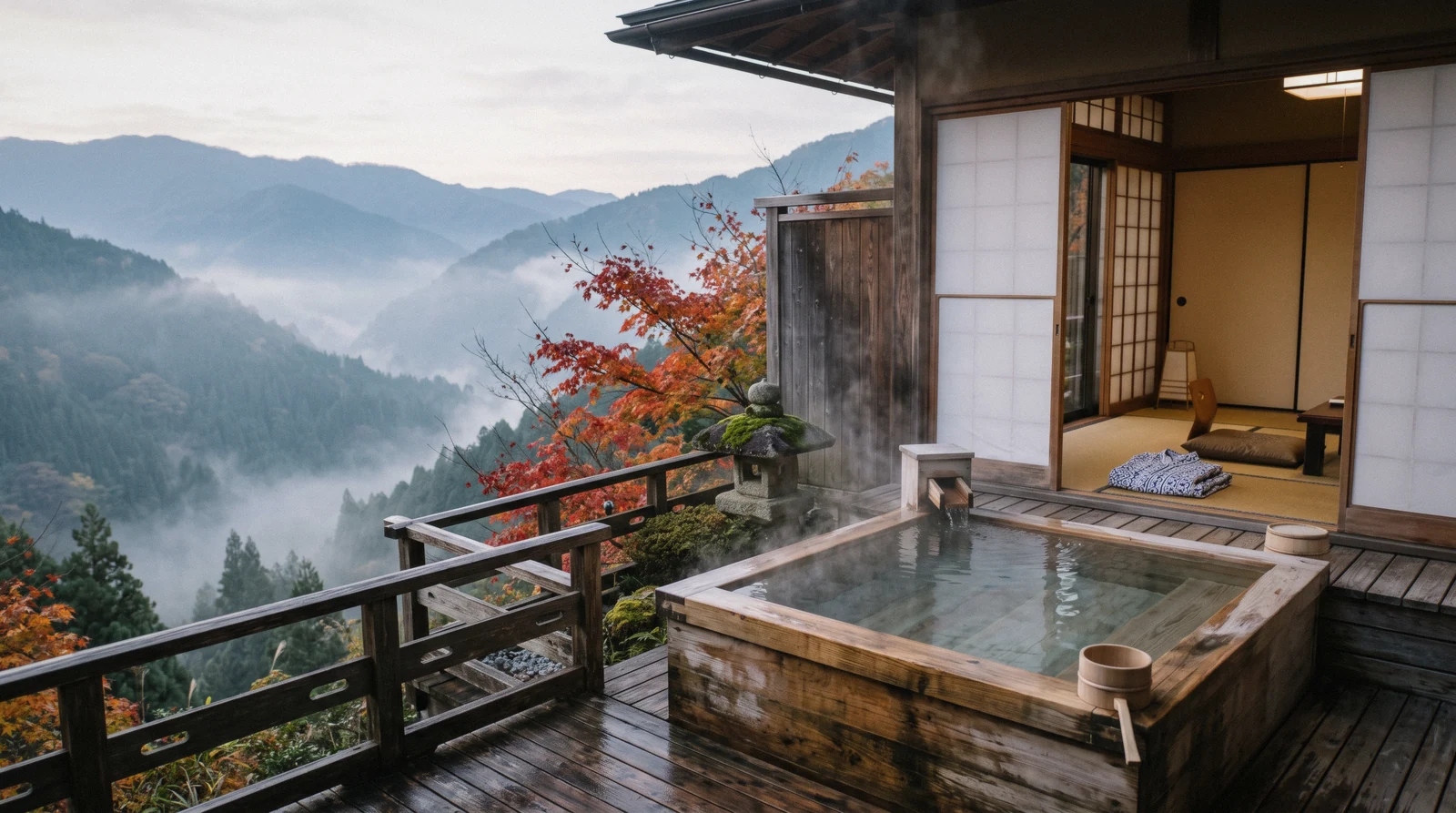
Three main kinds of private bath: an in-room open-air bath (kyakushitsu rotenburo), a reservable kashikiri bath, and the family-size kazoku-buro. A detached villa with its own bath is the rare fourth.
An in-room bath adds roughly ¥15,000-25,000 per night over a standard room, and that rate usually includes dinner and breakfast.
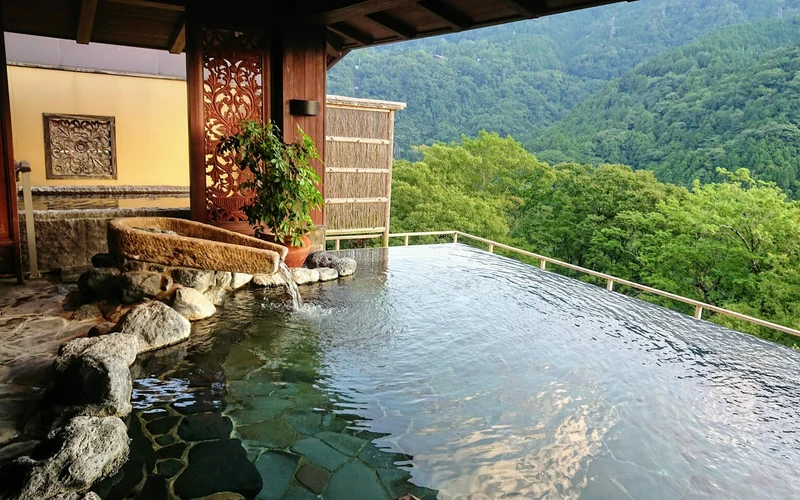
Hakone is the in-room bath town: at Hakone Suishoen all 23 rooms have a private open-air bath.
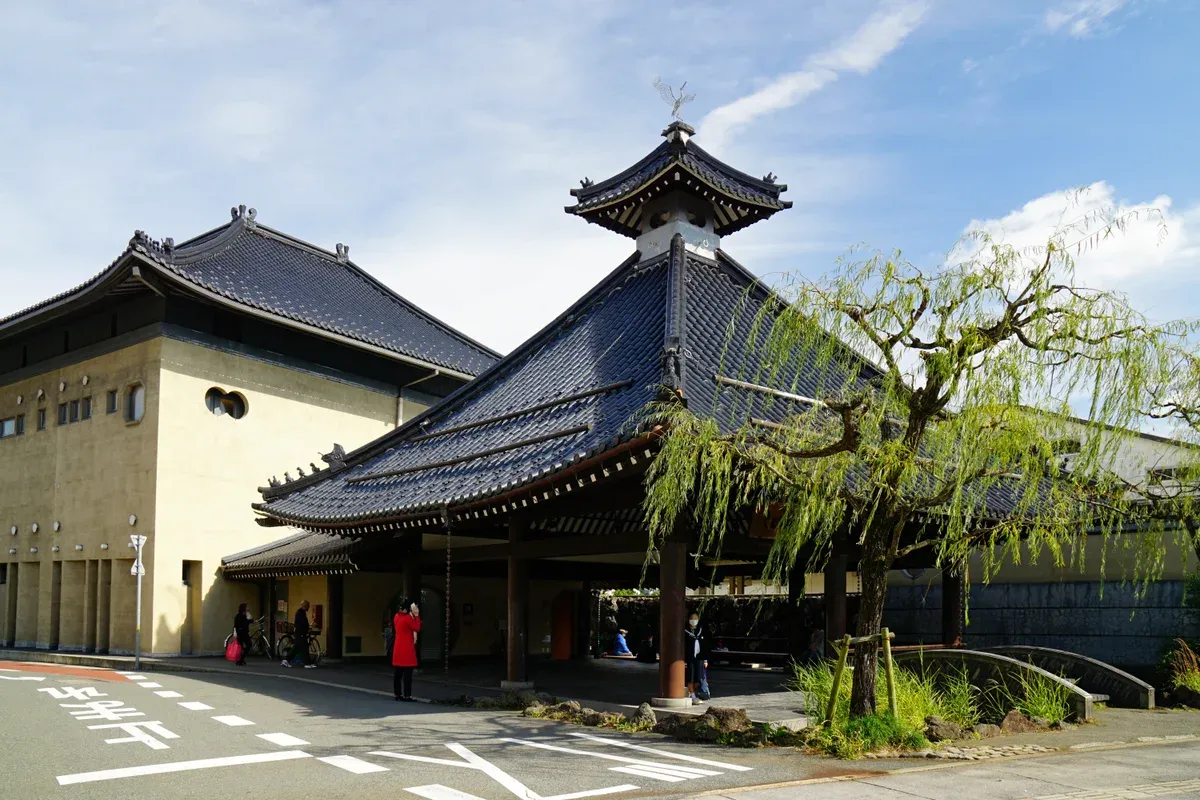
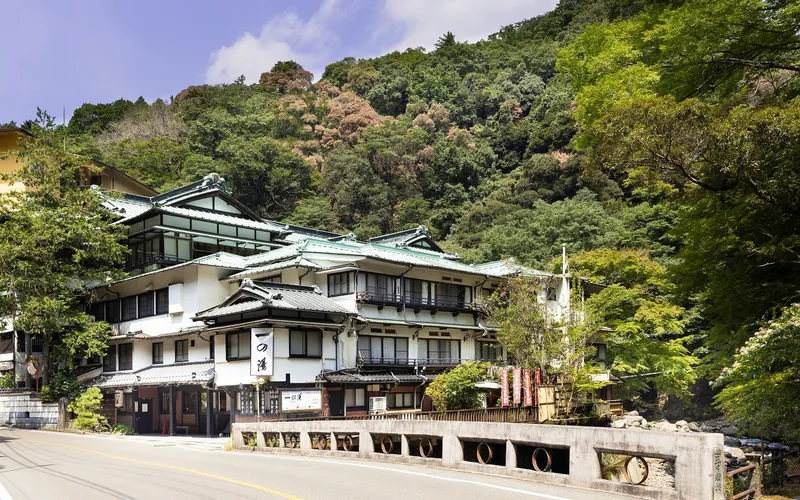
Kinosaki Onsen is the free private bath town: Tajimaya offers three complimentary private baths.
Private-bath rooms are 15-30% of a ryokan's inventory and sell out first.
Do Ryokans Have Private Onsen?
Yes, and the phrase covers several different setups. Some ryokan put a bath in your room, some rent you a bath by the slot, and some do both.
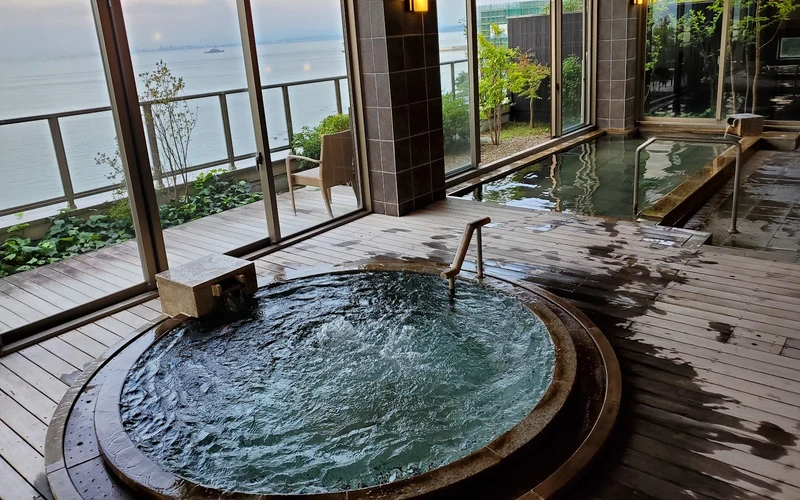
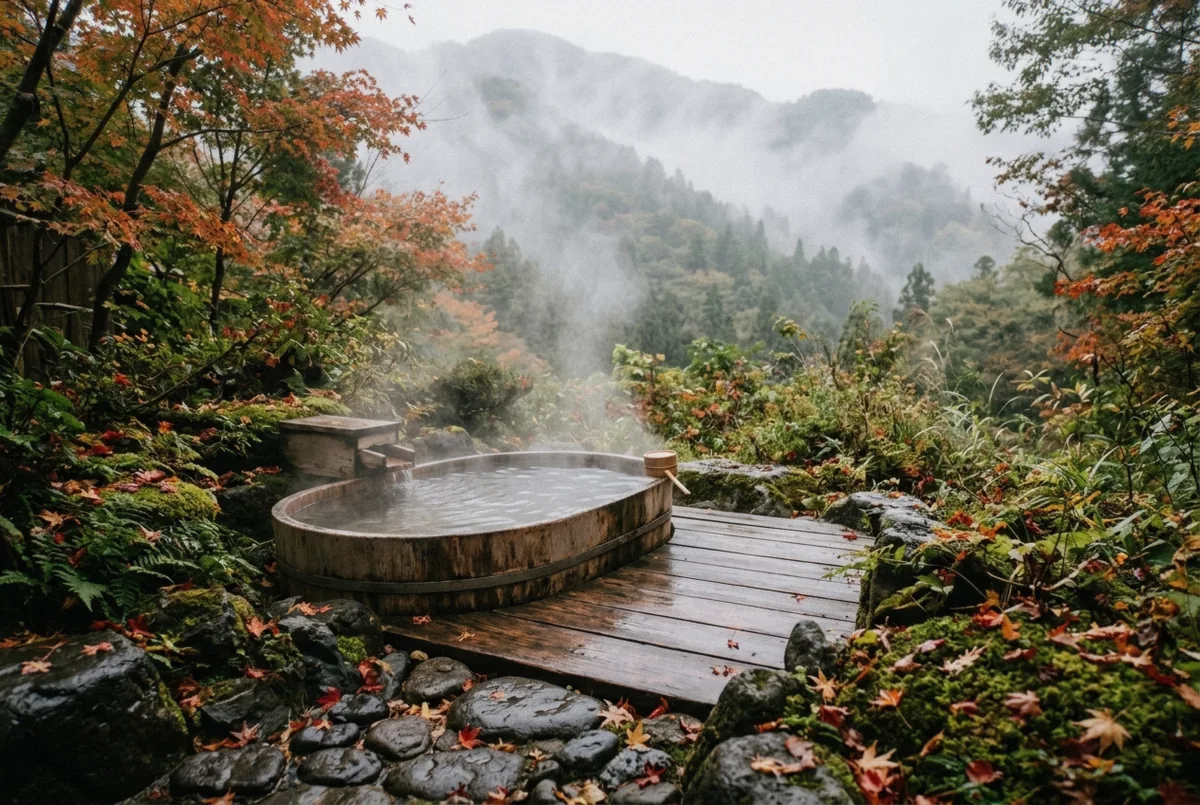
In-room open-air bath (kyakushitsu rotenburo): a bath on your terrace or in your room that is yours for the whole stay, around the clock.
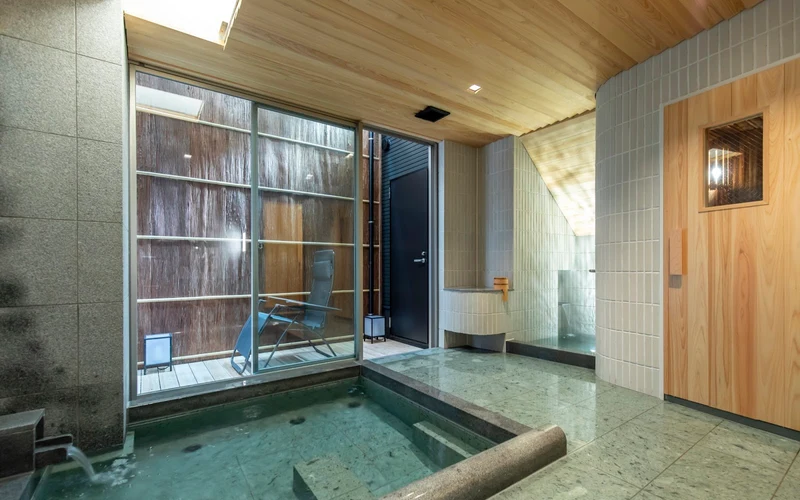
Reservable kashikiri bath: a private bath you book by time slot, often 40 to 60 minutes, sometimes free and sometimes a few thousand yen.
Family bath (kazoku-buro): a family-size kashikiri you lock for your group, often with its own booking fee.
Detached villa (bettei): a free-standing cottage with its own bath, rare and the most private option of all.
How Much Does a Private Onsen Cost?
A private onsen costs either a room premium or a slot fee. Japan Ryokan Guide puts stays in tiers per person per night with dinner and breakfast: ¥15,000-30,000 where the private bath is a kashikiri, ¥30,000-60,000 where in-room baths begin, and ¥60,000-150,000 and up for luxury ryokan.
Japanese Onsen puts the in-room premium at roughly ¥15,000-25,000 per night over a standard room. A kashikiri slot runs 40 to 60 minutes and costs ¥2,000-5,000 where the ryokan charges, though many give it to guests free.
The table sets the four ways to get a private bath side by side, with the cost each one adds.
Bath type
How you get it
Typical cost
Kashikiri (reservable private bath)
Book a 40-60 minute slot at the front desk
Free at many ryokan, ¥2,000-5,000 per session elsewhere
In-room open-air bath
Book a room listed with an open-air bath, a separate category from rental baths
From ¥30,000-60,000 per person per night with meals, a premium of about ¥15,000-25,000 over a standard room
Family bath (kazoku-buro)
A family-size kashikiri, reserved the same way
Often a separate fee, in the ¥2,000-5,000 slot range
Ryokan With Private Onsen in Hakone, Kinosaki and Beppu
The table compares every ryokan we list in Hakone, Kinosaki Onsen and Beppu that has a private, in-room, villa, family or reservable bath, with the guest score and the lowest nightly rate on its card. Each name opens the full card on our hot springs hotels destination pages.
Private bath reserved at the front desk on request
4.4
$95
From = the lowest nightly room rate shown on each hotel's card. Rate on request means the hotel publishes no rate for the dates shown.
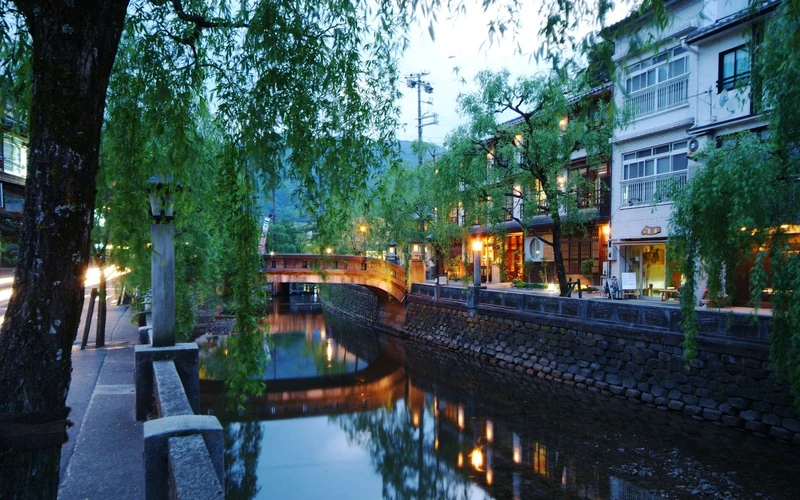
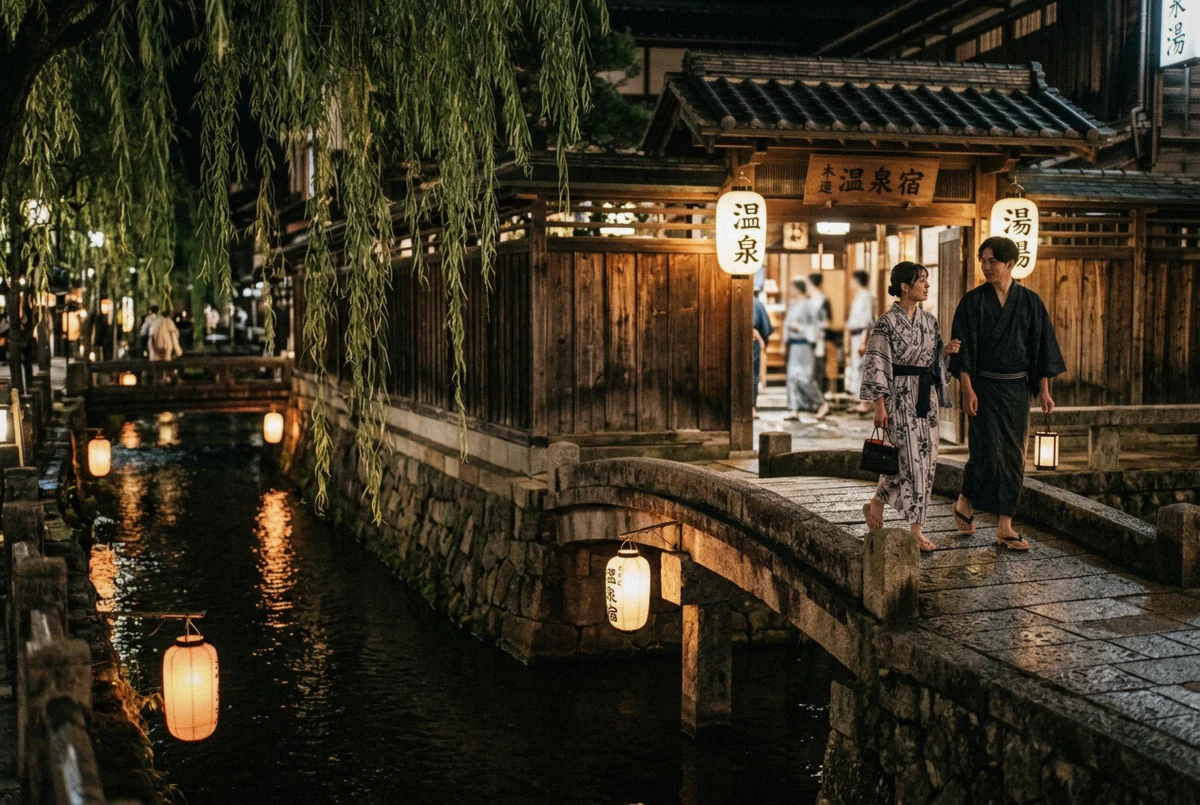
Kinosaki Onsen, where ryokan guests use a pass for the public baths. Photo: 663highland, CC BY 2.5, via Wikimedia Commons
Which Town Suits Which Private Bath?
Hakone is the in-room open-air bath town. Suishoen, Madoka no Mori, Ginyu, Gora Karaku and Tokinoyu Setsugetsuka all put a private bath in every room, so you never queue and never share.
Kinosaki Onsen is the town where private baths come free. Tajimaya has three complimentary private baths and Kinosaki Onsen Sensui gives guests free, unlimited use of two named private baths. Most of the inns we list also hand guests the yumepa pass for the town's public sotoyu baths. Those are gender-separated, so couples bathe together in the inn's private bath and use the pass for the town afterwards.
Beppu mixes both styles. AMANE RESORT SEIKAI has private open-air baths in 14 room types and Sanso Kannawaen sells rooms with deep soaking tubs. Nagomi No Yado Mutsuki rents its private bath at ¥2,000 per 60 minutes, with baths open 24 hours a day.
Communal baths in Japan are gender-separated, so a private bath is how couples bathe together. Book a room with its own bath or reserve a kashikiri slot and you share the water with nobody but each other.
Tattoos follow the same logic. Japan Ryokan Guide notes that an in-room bath makes tattoo rules moot because no other guest shares it. Kashikiri policies vary by property, so ask before you book.
How to Book a Room With a Private Onsen
Booking is easier once you know the Japanese terms and the timing.
Search the term 客室露天風呂付き, which means a room with an open-air bath. Rental private baths outside rooms are a separate category.
Check for 天然温泉 (natural hot spring) or 源泉かけ流し (undiluted free-flowing water), because some private baths use heated tap water.
Private-bath rooms are only 15-30% of a ryokan's inventory and they sell out first.
Peak seasons need 3-6 months of lead time.
February and June are quiet months and rates can fall 30-40%.
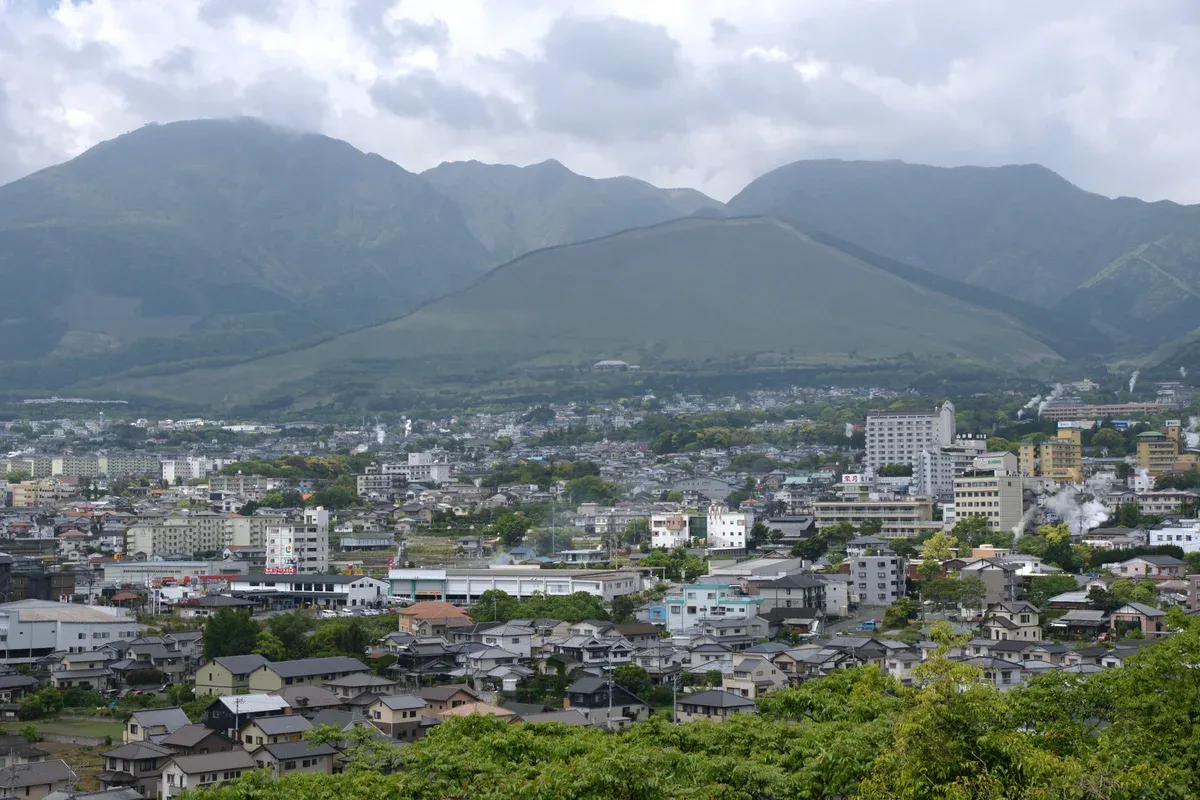
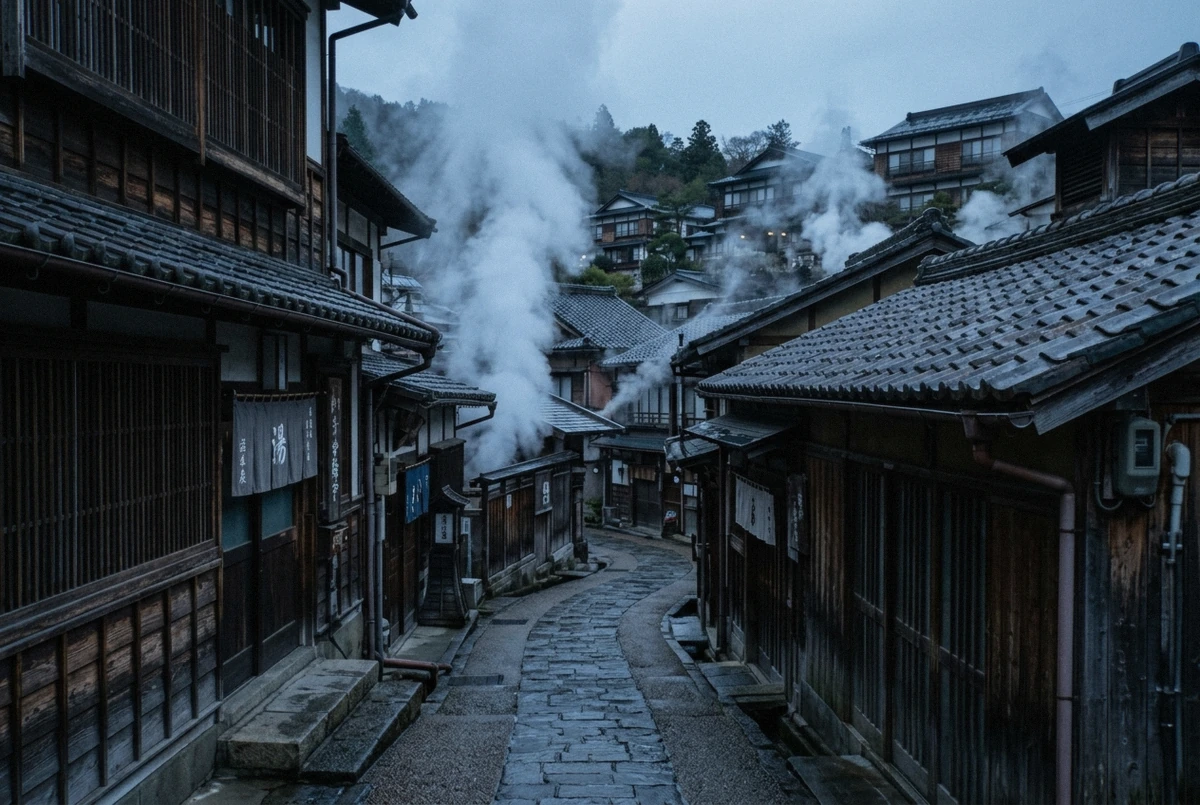
Steam vents over the Kannawa Onsen district of Beppu. Photo: 663highland, CC BY 2.5, via Wikimedia Commons
What Is the Difference Between a Ryokan and an Onsen?
An onsen is the hot spring bath itself, or the facility built around it. A ryokan is a Japanese inn, and an onsen ryokan is an inn with its own hot spring water where you sleep, eat and bathe. A ryokan with private onsen adds a bath nobody else can use, either in your room or by reservation.
Japanese Onsen notes that since 2005 bathing facilities must post whether their water is diluted, heated, recirculated or disinfected, so the sign by the bath tells you what you are soaking in.
Six Ryokan With a Private Bath of Their Own
These six ryokan give you a private bath in the room or behind a locked door. Each card is the hotel's own record from Hot Spring Stays, with its rating and nightly rate.
It depends on the bath type you want. For a bath inside your own room, Hakone Suishoen gives all 23 rooms a private open-air bath. For a free reservable bath, Tajimaya offers three complimentary private baths. For a villa, Hakone Retreat has 18 free-standing villas with private baths.
Can couples bathe together in an onsen?
Not in the ordinary communal baths, which are gender-separated. A private bath is how couples bathe together, either an in-room open-air bath like the one in every room at Hakone Suishoen or a reservable kashikiri.
Can you use a private onsen with tattoos?
Yes. An in-room bath makes tattoo rules moot because nobody else uses the water. Kashikiri policies vary by property, so ask the ryokan before you book.
Is the water in a private onsen real hot spring water?
It depends on the property. Some private baths use heated tap water, so check for the terms 天然温泉 (natural hot spring) or 源泉かけ流し (undiluted free-flowing water). Since 2005 bathing facilities must post whether their water is diluted, heated, recirculated or disinfected.
Is Kusatsu good for a private onsen?
Kusatsu is one of Japan's best-known hot spring towns, and our Kusatsu Onsen guide covers where to stay there. We do not list Kusatsu ryokan on our hotel pages yet. The nearest town from Tokyo we do list is Hakone, where every room at Hakone Suishoen has its own open-air bath.