Beppu Onsen Hotels: Where to Stay Across the Eight Bathing Districts
The cobalt pool and the blood-red pond in every Beppu photograph are attractions you look at, not water you get into. The bathing is elsewhere — spread over eight districts, and it includes hot sand and grey mud you will struggle to find anywhere else in Japan.
The "hells" (jigoku) are hot spring sources put on display. japan-guide calls them flatly "hot springs for viewing rather than bathing", and Wikipedia agrees. The seven-hell combined ticket is ¥2,400 adult and ¥1,200 child at the gate, 8:00–17:00, valid the day of purchase and the next one — and the only water you touch is at the four foot baths.
What you can get into: heated sand at Beppu Kaihin Sunayu on the shore (¥1,500, ages 5 up, walk-in only — individual reservations are not accepted), the same thing indoors at the 1879 Takegawara Onsen (¥1,500 with sand, ¥300 for the plain bath, 6:30–22:30), and a grey outdoor mud pool at Hoyoland in Myoban.
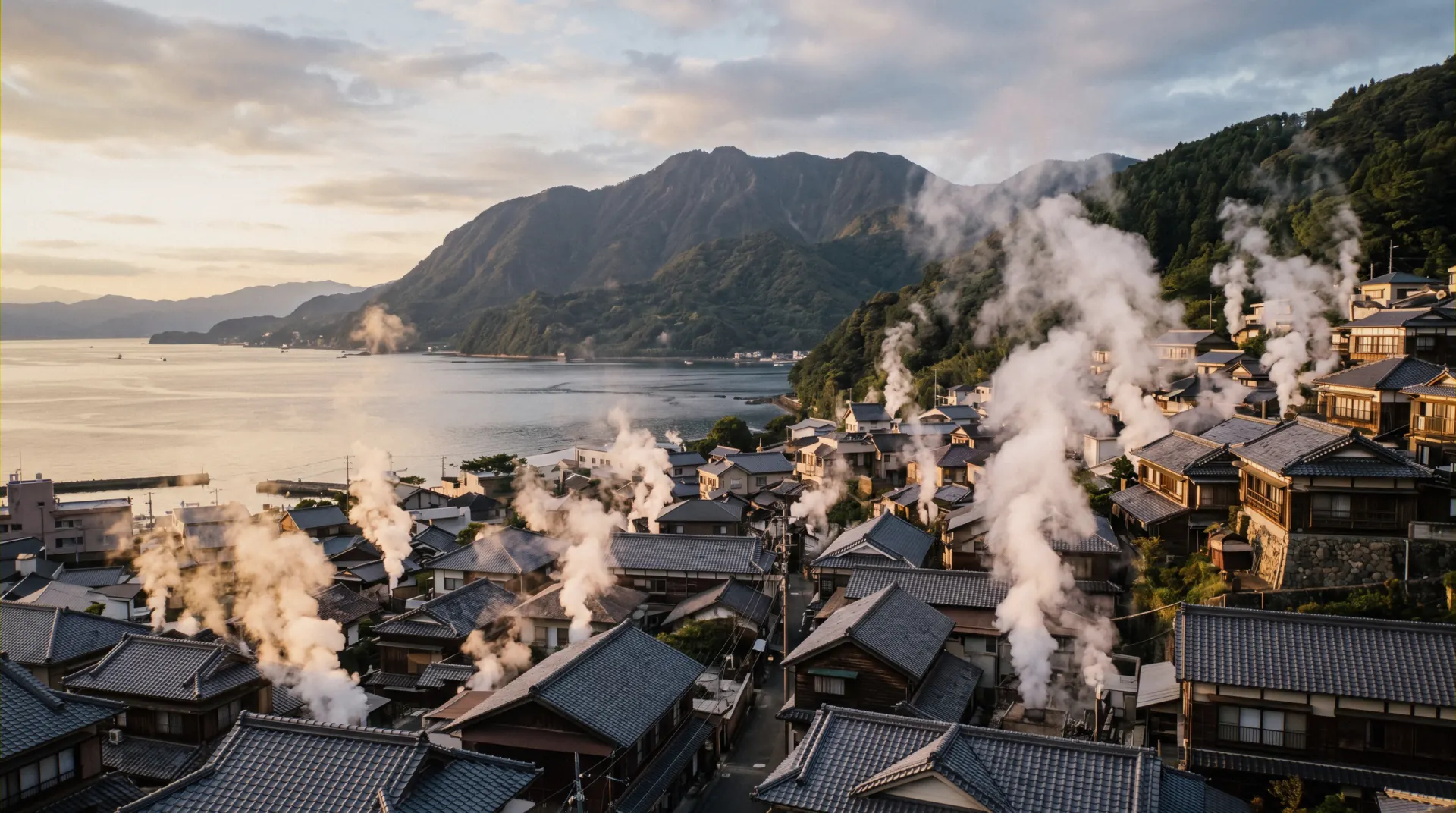
Beppu is eight hot spring districts, not one bath — the Beppu Hatto: Beppu, Hamawaki, Kannawa, Horita, Kankaiji, Myoban, Shibaseki and Kamegawa. Pick the district before the price. Kannawa is the steam-in-the-streets ryokan quarter, and Sanso Kannawaen is its blue-water address.
The tattoo reputation is real at the public baths and does not transfer to the hotels. Hyotan, Takegawara, Shibaseki, Horita, Hamawaki, Kaimonji, Furosen and Ta no Yu are listed fully tattoo friendly; Grand Mercure bars tattooed guests from its bath outright and AMANEK allows a private bath but no rooftop pool.
Hyotan Onsen in Kannawa — the only onsen in Japan with three Michelin Green Guide stars, seven editions running — charges ¥1,160 for age 13 up on its own fee page, and runs 9:00 to 01:00. japan-guide still lists ¥1,020 and a 2026 write-up says ¥940; the operator's figure is the one to budget from.
Our nightly rates look low next to Japanese sites because they are per room, room-only. Japanese ryokan sell per person with dinner and breakfast: Sanso Kannawaen is ¥35,200 per couple room-only against ¥56,100 with two meals, for the same stay.
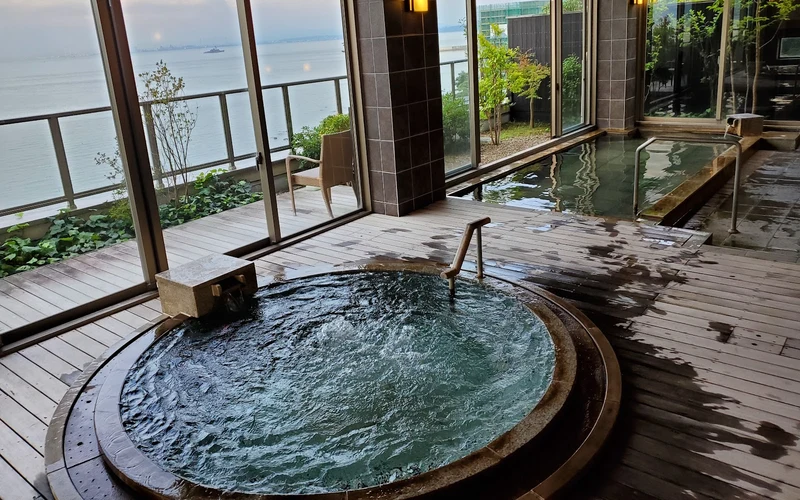
For water at the room rather than down a corridor, AMANE RESORT SEIKAI on the Kamegawa shore has 14 room types with source-fed private open-air baths facing the sea.
Hotel data and prices checked August 2026. Nightly rates are a snapshot for 10–13 November 2026, two adults.
Beppu Onsen Hotels, Compared
Ten properties across the districts, sorted by what the water actually is: a tub on your own terrace, a communal bath with a view, a plain indoor bath at a business-hotel price, or nothing confirmed at all.
Kannawa source water; the operator advertises 100% source-flowing baths in the rooms, and calls the communal Hono-yu water shinpi no aoyu, "mysterious blue water"
Communal gender-separated bathhouse plus rooms with indoor and/or outdoor deep soaking tubs (露天風呂付客室)
Room tub plus the communal bathhouse; no published day-bathing rate was found, so treat the water as guests-only
Kankaiji hot spring water feeding both Tanayu and the swimsuit-on Aqua Garden
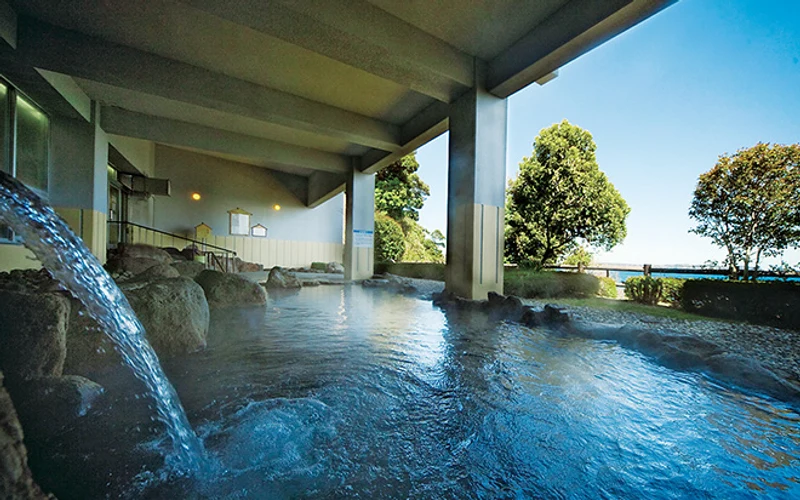
Tanayu open-air bath in five terraced tiers facing the bay, plus the Aqua Garden hot spring pool with jet, vibration, walking and waterfall sections
Both baths come with a room; both are also sold to non-guests, which is unusual at this scale — Tanayu ¥1,500–2,800 adult by season, 9:00–23:00, last entry 22:00
Bicarbonate spring water — the "beauty spring", valued for its mild exfoliating effect on skin, per the hotel's own English page
Top-floor public bath with sauna and an open-air bath, a rooftop infinity onsen pool and jacuzzi pool entered in swimwear, and a seasonal Finnish tent sauna from October to June
All of it comes with the room; the front desk reserves the private bath on request
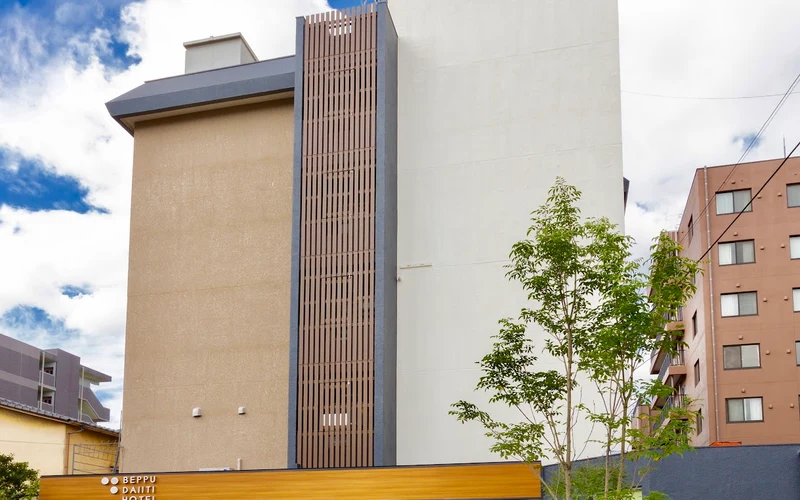
No bathing claim could be checked. The harvest returned no description and no onsen wording, and b-daiiti.com published nothing verifiable — this is an absence of evidence, not evidence of absence
None confirmed
Assume nothing thermal. Takegawara Onsen charges ¥300 for the ordinary bath and the ward baths run ¥100–300
4.2/5 (704)
$48
Nightly rates are a snapshot for a 10–13 November 2026 stay, two adults, and they are per room, room-only. Japanese channels quote most ryokan-class properties per person with dinner and breakfast, which roughly doubles then adds again — see the pricing section below. Bath prices, hours and springs figures are as published by operators and Beppu City on August 10, 2026.
Which One Is for You
Beppu sorts on district first and bathing style second. The question that decides most bookings is whether you want your own tub, a view bath, or the cheapest bed within walking distance of a ¥300 public bath.
Every property below is checked against what its own site, Beppu City's tourism pages and the tattoo-policy pages publish — where the water comes from, what a room includes, and which bath a tattoo will keep you out of.
Source temperature
210°F / 99°C
Beppu City reports over 2,300 sources at about 83,000 litres a minute; a 2004 survey counted 2,909 vents. The hells run near boiling and are for looking at.
When to soak
Year-round
Steam is most photogenic on cold mornings; Yufuin is 25 minutes away and completely different in character.
Day entry
¥300–2,800
From ¥300 at Takegawara's bath to ¥2,800 for Suginoi's terraced Tanayu; the hells circuit is ¥2,400 and buys no bathing at all. Checked August 2026.
Elevation
33 ft
Altitude shortens comfortable soaking time — drink water.
Kids
mixed
Public baths are broadly tattoo-friendly, hotels much less so — the split matters more here than the age rules.
Nearest airport
Oita (OIT)
About 45 minutes by road.
The Hotels, One by One
In-room and view baths first, then the station-area hotels with communal onsen, then the two properties that need an asterisk: one outside the Beppu Hatto entirely, one whose bathing we could not verify.
Source-fed ocean rotenburo on your own terrace
AMANE RESORT SEIKAI
4.4/5
Shoningahama, on the Beppu Bay shore in the Kamegawa district · 1,647 Google reviews
Hot springs on-site
Water
Shoningahama source water; the resort's own site says the guest-room baths run "water directly flowing from the source"
Pools
14 room types with private open-air baths, a top-floor bath with a 180-degree view of Beppu Bay, and the ground-floor Shiosai-no-Yu
Room includes
The room's own open-air tub is yours the whole stay; the communal top-floor bath comes with the room
Kids
All ages
The property now trades as AMANE RESORT SEIKAI — searches and older guides still return it as Seikai, and the harvest carries the old name.
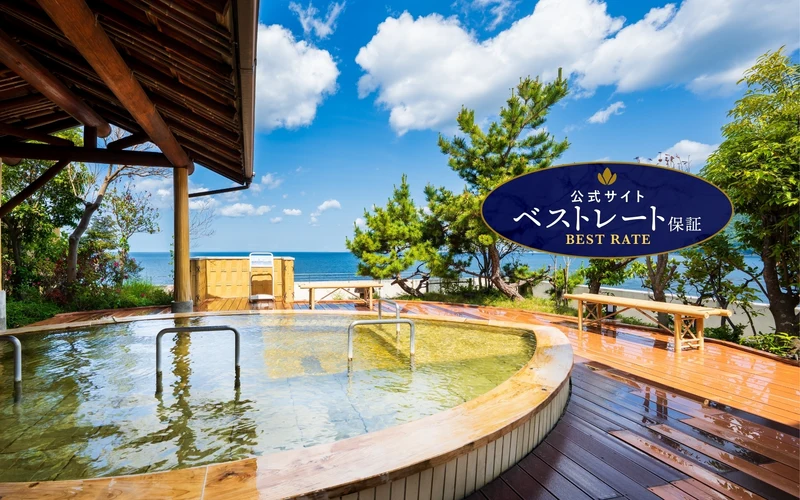
Rotenburo means an open-air bath. Here it is on your terrace, facing the water: seikai.co.jp describes 14 room types with private outdoor hot spring baths on source water with ocean views, and the harvested listing independently notes "terraces with open-air hot spring soaking tubs and views of the bay."
Position is part of the pitch — 3 km from the Hells, an 8-minute walk from the nearest station, and walking distance from the Beppu Kaihin Sunayu sand bath.
seikai.co.jp/en returned HTTP 404 when this was checked on August 10, 2026, so the room detail is read off the Japanese site. No day-use price and no tattoo rule were published in either language; the Shiosai-no-Yu bath is described as free in combination with a meal booking, which is not the same as a day pass.
345 Kannawa, on the hillside above the steam vents, about 6 km from Beppu Station · 808 Google reviews
Hot springs on-site
Water
Kannawa source water; the operator advertises 100% source-flowing baths in the rooms, and calls the communal Hono-yu water shinpi no aoyu, "mysterious blue water"
Pools
Communal gender-separated bathhouse plus rooms with indoor and/or outdoor deep soaking tubs (露天風呂付客室)
Room includes
Room tub plus the communal bathhouse; no published day-bathing rate was found, so treat the water as guests-only
Kids
All ages
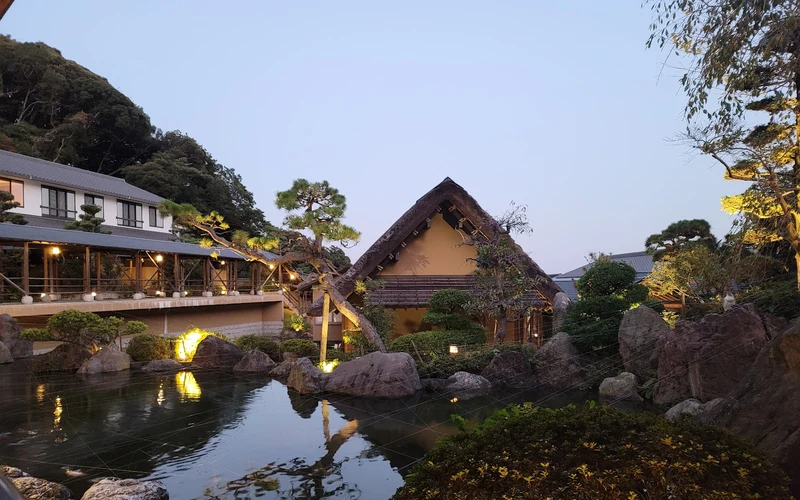
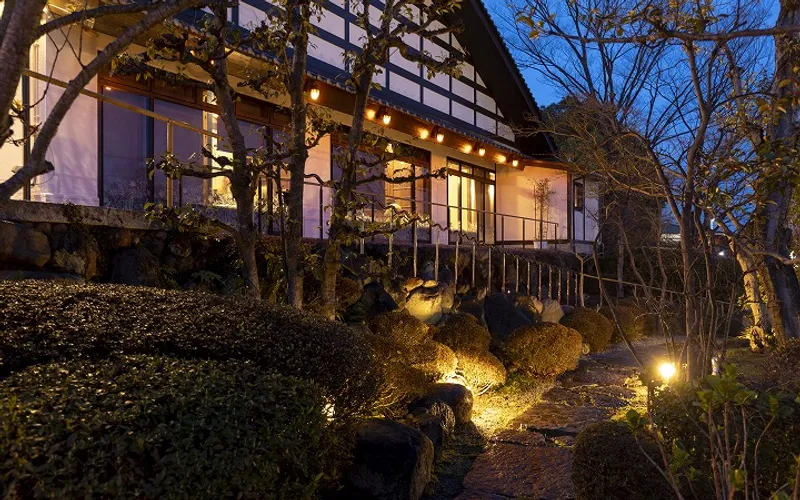
The ryokan answer in Kannawa: a walled garden property with heritage structures, a theatre and a tea room, and staff listed in English, Japanese, Korean and Mandarin.
This is the page's clearest meal-plan warning. A Japanese booking site lists a stay here from ¥35,200 per couple room-only, rising to ¥56,100 with dinner and breakfast — the same room, a ¥20,900 difference. Our figure is the room-only basis.
The most expensive property in the harvest, and the OTAs quote higher again for the same November dates.
No 日帰り入浴 (day bathing) rate appears on kannawaen.jp, so do not turn up expecting to buy a soak.
1 Kankaijicho, on the Kankaiji terrace above the city · 114 Google reviews
Hot springs on-site
Water
Kankaiji hot spring water feeding both Tanayu and the swimsuit-on Aqua Garden
Pools
Tanayu open-air bath in five terraced tiers facing the bay, plus the Aqua Garden hot spring pool with jet, vibration, walking and waterfall sections
Room includes
Both baths come with a room; both are also sold to non-guests, which is unusual at this scale — Tanayu ¥1,500–2,800 adult by season, 9:00–23:00, last entry 22:00
Kids
All ages
Tanayu is built like rice terraces, five levels stepping down toward Beppu Bay — sunrise and the city lights are what people come up here for.
The Aqua Garden is a swimsuit facility, not a traditional bath: ¥2,000 adult and ¥1,400 for children aged 3 to elementary Monday to Friday, 11:00–22:00, with suits rented from ¥440.
Day-use children pay ¥1,000–2,000 for Tanayu, and day visitors get bath and face towels free.
A full resort — five restaurants, a bowling alley, karaoke — so this is the family option, not the quiet one. The harvested rate is room-only; buffet dinner plans are quoted separately.
Kokura, at the foot of Mt Ogiyama, associated with Kannawa Onsen · 499 Google reviews
Hot springs on-site
Water
Kannawa-area hot spring water
Pools
Large public bath, reservable private baths, a foot bath
Room includes
Baths open 24 hours a day; a private bath is reservable at ¥2,000 per 60 minutes
Kids
All ages
Kashikiri means a private bath you book by the hour, and this is the one property here with a published price for it: ¥2,000 per 60 minutes, per livejapan.com.
That price is the practical workaround on this page. Tattooed travellers, couples and anyone who does not want to bathe communally can sidestep every policy question for the cost of a couple of day passes.
The baths run 24 hours, which no station-area business hotel on this list offers.
A genuine ryokan, so Japanese channels will quote it per person with dinner and breakfast; the rate here is per room, room-only.
6-35 Ekimae Honmachi, three minutes' walk from Beppu Station · 1,992 Google reviews
Hot springs on-site
Water
Bicarbonate spring water — the "beauty spring", valued for its mild exfoliating effect on skin, per the hotel's own English page
Pools
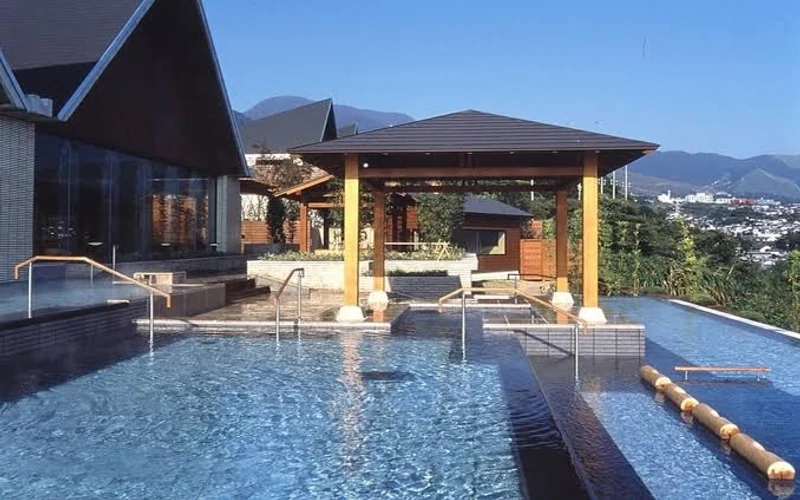
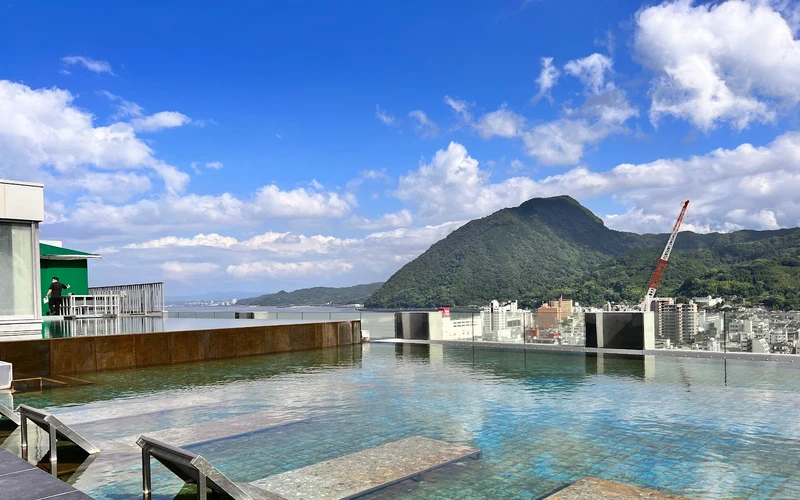
Top-floor public bath with sauna and an open-air bath, a rooftop infinity onsen pool and jacuzzi pool entered in swimwear, and a seasonal Finnish tent sauna from October to June
Room includes
All of it comes with the room; the front desk reserves the private bath on request
Kids
All ages
The split tattoo rule here is the most useful line on the page, and no listing site prints it: the hotel says tattooed guests can use a reservable private bath, but are not allowed in the rooftop infinity onsen pool, the jacuzzi pool or the tent sauna.
191 rooms three minutes from the station, so this is the modern-hotel answer rather than the ryokan one — conventional private bathrooms, communal onsen upstairs.
The OTA spread on identical November dates is the widest in the harvest: Booking.com at $117 against Expedia and Hotels.com at $203. Check more than one before booking.
Reviewers talk about the pool, the gym and the location far more than the rooms; parking is the one topic running clearly negative.
3 Chome Kitahama, front row on Beppu Bay, within a 10-minute walk of Beppu Station · 1,004 Google reviews
Hot springs on-site
Water
Beppu Onsen district hot spring water at the Kitahama seafront
Pools
Communal open-air hot spring baths facing Beppu Bay
Room includes
Bathing comes with the room; the bath is the communal one, not an in-room tub
Kids
All ages
The mid-price seafront soak in this set: the hotel's own English page describes bathing in natural hot springs "while gazing out over Beppu Bay, with front-row ocean views from check-in."
Dinner is a traditional kaiseki course and breakfast is a paid buffet served 7:00–9:00 — the Japanese per-person meal model layered onto a room rate.
Japanese-Western hybrid rooms, so futons are a choice rather than the only option.
Takegawara Onsen and its ¥1,500 sand bath are a short walk along the flat downtown grid from here.
Tatami underfoot everywhere, shoes off at the door
Onyado Nono Beppu
4.5/5
2-6 Ekimae Honmachi, one minute from Beppu Station · 964 Google reviews
Hot springs on-site
Water
Natural hot spring water (天然温泉) per Dormy Inn's own spa page
Pools
Communal hot spring bath and a self-service löyly sauna on the 13th floor
Room includes
Included with the room — but not for tattooed guests; tattooed guests are turned away
Kids
All ages
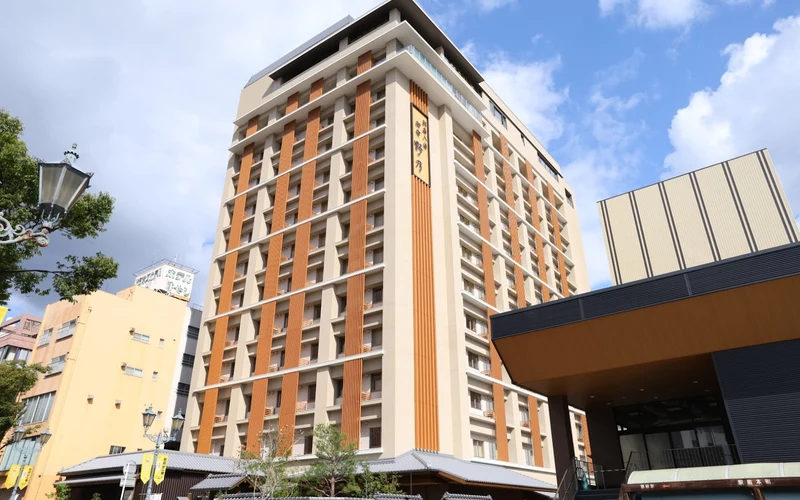
Dormy Inn's tatami-floored Japanese-style brand: you leave your shoes at the entrance and walk the whole hotel barefoot.
The hard stop for some readers: dormy-hotels.com states that guests with tattoos are not permitted to use the bathing facilities, though cover stickers of about 8 x 10 cm are sometimes provided. A small tattoo may be coverable; a sleeve is not.
One minute from the station makes it the easiest base for day-tripping to Yufuin or the Hells by bus.
Highest guest rating in the harvest. Rates are Western convention — room plus a paid breakfast buffet — so the figure shown is directly comparable to hotels back home.
2 Chome-10-4 Kitahama, facing Beppu Bay, 10 minutes' walk from Beppu Station · 1,721 Google reviews
Hot springs on-site
Water
Natural hot spring water in the communal bathhouse, per the property's listing
Pools
One communal bathhouse — no view bath, no open-air
Room includes
Included with the room; standard unit bathrooms otherwise
Kids
All ages
A redbrick business hotel two minutes from Beppu Tower, and the cheapest way on this page to sleep above genuine hot spring water within walking distance of Takegawara Onsen.
The trade is honest: compact rooms and a modest indoor bath, not a terrace over the bay.
Location, transit and cleanliness run strongly positive in its review topics; sleep quality is the outlier, with 10 negative mentions against 5 positive.
Coin laundry on site, and a Japanese and Western breakfast buffet for a surcharge — useful on a longer Kyushu trip.
Hiramichi, Hiji town, Hayami-gun — the north shore of Beppu Bay, outside Beppu city and outside the Beppu Hatto · 3,813 Google reviews
Hot springs on-site
Water
Hiji Onsen, a sodium chloride spring rising on the premises — the hotel's own spa page says the source "springs from the premises"
Pools
Large public bath, an open-air bath positioned for sunrise over Beppu Bay, and a sauna
Room includes
Included with the room. Tattooed guests are excluded as a rule
Kids
All ages
Say the location plainly: the address is Hiji, roughly 5 km beyond the Beppu city line, so this is not one of the eight Beppu districts and Kannawa is a drive rather than a walk.
What it does have is real: its own sodium-chloride source on the property, feeding a large public bath and a sunrise open-air bath over the bay.
The flat rule to check first — the hotel's own page says guests with tattoos are not, as a general rule, permitted to use the bath. There is no private-bath workaround stated.
Priced the Western way, per room with meals as add-ons, and every OTA in the harvest quotes the identical figure for the sample dates.
2-40 Noguchi Motomachi, a few minutes inland of Beppu Station · 704 Google reviews
Walk to the springs
Water
No bathing claim could be checked. The harvest returned no description and no onsen wording, and b-daiiti.com published nothing verifiable — this is an absence of evidence, not evidence of absence
Pools
None confirmed
Room includes
Assume nothing thermal. Takegawara Onsen charges ¥300 for the ordinary bath and the ward baths run ¥100–300
Kids
All ages
The cheapest bed in the harvest, in the flat Beppu Onsen district a short walk inland from the station.
We could not confirm whether it has a hot spring bath. Rather than infer one from the neighbourhood, it is carded as a walk-tier property — ring the hotel if the bath decides your booking.
In this town that costs less than it would anywhere else: the municipal and ward baths nearby are fed by real hot spring water at sento prices.
Rated well by guests for what it is. No meal plan was verified; the rate is room-only.
Rates shown are snapshots for 10–13 November 2026, two adults, per room and room-only. Some links on this page are affiliate links; they cost you nothing and don't change our ordering.
Prefer to browse everything bookable in Beppu? Search all stays:
Where the Water Actually Is
Beppu Hatto means Beppu's eight hot spring districts, and each one has a different water and a different mood. They run from the flat station grid by the sea up the hillside to the sulfur fields. The seven hells sit in two of them — Kannawa and Shibaseki — and you look at those rather than bathe.
Beppu Onsen and Hamawaki — the flat downtown by the station and Kitahama seafront
cheapest beds, walkable public baths
Takegawara Onsen, built 1879: ¥1,500 sand bath, ¥300 plain bath, 6:30–22:30Ward baths at ¥100–300, fed by real hot spring waterHotel communal baths, some facing Beppu Bay
This is where the trains, the buses and the cheap food are. Hamawaki is the quiet stretch immediately south of the centre, listed as fully tattoo friendly at its municipal bath.
Kannawa and Shibaseki — the steam-vent hillside
ryokan district, five of the seven hells
Hyotan Onsen: ¥1,160 age 13 up, indoor, open-air, steam, sand and waterfall massage, 9:00–01:00Shibaseki Onsen municipal bath: ¥300 adult, ¥100 child, 7:00–20:00Ryokan baths on source-flowing Kannawa water
Kannawa is the district where vapour rises out of street grates and food is steamed over the vents. Shibaseki is the smallest of the eight, up in the hills, and holds the Blood Pond and the geyser.
Kankaiji and Myoban — the terraces above town
view baths and the sulfur fields
Suginoi's Tanayu: five terraced tiers, day-use ¥1,500–2,800 adult, 9:00–23:00Aqua Garden, swimsuit-on: ¥2,000 adult, ¥1,400 child weekdays, suits from ¥440Hoyoland's outdoor mud pool in Myoban, mixed-gender
Myoban is the sulfur district: milky water, and the thatched huts where yunohana crystals are farmed. Horita, the eighth district, sits between the two and keeps its own small municipal bath.
Kamegawa and the north shore
sand baths and the sea
Beppu Kaihin Sunayu: ¥1,500 from age 5, towel ¥350, walk-in onlySource-fed private terrace baths at the shore resortsHiji Onsen, on the Grand Mercure's own premises, beyond the city line
Kamegawa runs along the coast and holds the beach sand bath. The Grand Mercure is listed here for geography only — its address is Hiji town, outside Beppu and outside the eight districts.
⟷AMANE RESORT SEIKAI is the one address that pairs with the beach sand bath on foot — Beppu Kaihin Sunayu is in the same Shoningahama stretch of Kamegawa, and the Hells are 3 km inland.
⟷From the station cluster — AMANEK, Onyado Nono, Nishitetsu and Beppu Daiichi — Takegawara Onsen is a walk and Kannawa is a Kamenoi bus ride; a 1-day unlimited pass is ¥1,100.
⟷Sanso Kannawaen and Nagomi No Yado Mutsuki put you in Kannawa, which means five of the seven hells and Hyotan Onsen are on your doorstep and the station is 6 km downhill.
⟷Suginoi Hotel is up on the Kankaiji terrace — the view is the reason, and Tanayu is open to non-guests, so you can also just buy your way in from a cheaper bed downtown.
hot springs on-sitewalk to the springsdrive to the springsno thermal water
Beppu Springs by the Numbers
Quoted from Beppu City's own tourism site, the operators' fee pages and japan-guide as fetched on August 10, 2026 — including two figures that contradict each other and are printed apart rather than averaged.
Hot spring sources
2,300 to 2,909
Beppu City's Enjoy Onsen site says "over 2,300 sources… about one-tenth of Japan's total". Wikipedia, citing a 2004 national survey, counts 2,909 vents. Nobody publishes a figure in between.
Water output
About 83,000 litres a minute
Beppu City's own figure. Wikipedia's 2004 survey gives more than 130,000 tons a day — the same order of magnitude, not the same number.
World ranking
Second, behind Yellowstone
Beppu City concedes the point and reframes it: Yellowstone is "the best globally in terms of the amount of hot springs output. However, Beppu is the greatest when it comes to really experiencing hot springs." Attribute it, don't state it flat.
Seven-hell combined ticket
¥2,400 adult / ¥1,200 child
Gate price on the official Kamado Jigoku page, 8:00–17:00, valid the day of purchase and the following day. KKday advance tickets go at ¥2,200 and blogs quote ¥2,000.
Umi Jigoku source water
208°F / 98°C
The Sea Hell is hot enough that onsen eggs are boiled in it. This is a viewing site behind fences, not a bath.
Mount Tsurumi summit
4,511 ft
The volcano behind town. The ropeway is Kyushu's largest at 101 passengers, about ten minutes up, ¥1,800 return adult and ¥900 child, 9:00–17:00.
The Hells Are for Looking At. Read That Twice Before You Book
Every image search for Beppu returns the same two photographs: a cobalt pool steaming under a red torii, and a pond the colour of rust. Those are the jigoku — the hells — and they are hot spring sources put on display, not places to bathe. japan-guide describes them in four words: "hot springs for viewing rather than bathing." Wikipedia's article says the same thing. The system is a nationally designated Place of Scenic Beauty, and Umi Jigoku, the cobalt one, runs at 208°F / 98°C, which is used on site to boil eggs. You are not getting in.
The association course covers seven sites. Five sit in Kannawa — Umi Jigoku, Oniishibozu, Shiraike, Kamado and Oniyama — and two more, Chinoike (the Blood Pond) and the Tatsumaki geyser, are a short drive away in Shibaseki. The combined ticket on the official Kamado Jigoku page is ¥2,400 for adults and ¥1,200 for elementary and junior-high students, gates 8:00 to 17:00, open year round, valid on the day you buy it and the following day, and you can start at any hell. A single hell is ¥500 adult, ¥250 child.
Two price caveats. KKday resells an advance combined ticket at ¥2,200, and various blogs still quote ¥2,000 or ¥2,200 — treat ¥2,400 as the gate price and the rest as discounts or stale copy. And figures circulating for the Tatsumaki geyser — 150 degrees, eruptions over 50 metres — come from aggregator text with no primary source behind them, so they are not repeated here as fact.
The one place you touch the water is the foot baths, at four of the seven sites. That is the whole extent of the contact. The practical shape of a Beppu day follows from this: hells in the morning while the gates are open, and an actual bath in the afternoon. If you booked a Beppu trip on the strength of the Blood Pond photograph, this is the paragraph that saves the holiday.
What You Actually Bathe In: Sand, Mud, and a Three-Star Ticket
The compensation for the look-only hells is that Beppu offers two bathing formats that almost nowhere else does. The first is sunayu, the sand bath. You change into a provided yukata, lie down in a trench, and attendants shovel geothermally heated sand over you up to the neck; a hot spring rinse follows. Beppu Kaihin Sunayu, the municipal one on the Shoningahama shore in Kamegawa, charges ¥1,500 per person from age 5, plus ¥350 if you need a towel. Hours are 8:30 to 18:00 from March to November with last registration at 17:00, and 9:00 to 17:00 from December to February with last reception at 16:00, closed the fourth Wednesday of the month. The detail that catches people out: individual reservations are not accepted at all. You walk in, take a number, and wait — only groups of ten or more can book ahead.
The indoor version is at Takegawara Onsen, the heavy-roofed 1879 bathhouse downtown: ¥1,500 for the sand bath including the ordinary bath afterwards, or ¥300 for the bath alone. Open 6:30 to 22:30, sand from 8:00, last entry 21:30, closed the third Wednesday of the month. Secondary guides say the sand bath needs a same-day in-person reservation, so go and put your name down during the day rather than turning up at nine at night.
The second oddity is mud. Beppu Onsen Hoyoland, up in the sulfur-scented Myoban district, is a large grey outdoor mud pool that is konyoku — mixed gender — with the opacity of the mud serving as the covering, and a separate sheltered entry for women. We could not reach an operator page for it. Admission is reported at around ¥1,500 by one source and ¥1,100 by another, and hours as 9:00 to 19:00 by one and 8:30 to 22:00 by another. That is not a price we are willing to publish as settled: confirm before you travel.
For a straightforward, everything-under-one-ticket soak, Hyotan Onsen in Kannawa is the answer. It has run since 1922 on 100% free-flowing spring water with no recirculation, and it is the only onsen in Japan awarded three stars by the Michelin Green Guide Japon — seven editions in a row. Its own fee page says ¥1,160 for age 13 and up, ¥400 for ages 7 to 12, ¥280 for 4 to 6 and free under 3, open 9:00 to 01:00. A private family bath is ¥2,400 for 60 minutes, ¥3,000 for 75 and ¥3,600 for 90. japan-guide still prints ¥1,020 and a 2026 write-up says ¥940; go with the operator's figure and budget the higher one.
Two vocabulary notes that make the rest of this page readable. Under Japan's Hot Spring Act an onsen is naturally occurring underground water or vapour that is at least 77°F / 25°C at the source, or that carries designated minerals above a threshold; a sento is a neighbourhood bathhouse on heated tap water. Beppu blurs that line in your favour — its ¥100 to ¥300 ward baths run on genuine hot spring water, so they are onsen at sento prices. Rotenburo means an open-air bath; kashikiri means a private one you reserve by the hour.
Eight Districts, Eight Different Waters — and How to Move Between Them
Beppu is not one hot spring with a town around it. It is a city sitting on a geothermal field, and Beppu City's own phrasing is that the Beppu Hatto "symbolize that abundance… each of which houses a different spring quality." The eight are Beppu Onsen (the flat station and Kitahama area), Hamawaki, Kannawa, Horita, Kankaiji, Myoban, Shibaseki and Kamegawa. Choosing between them is the actual booking decision, and it matters more than a star rating.
Kannawa is the one people picture: steam rising out of street grates on a hillside, food baskets set over the vents, ryokan behind walls. Sanso Kannawaen is its landmark, with source-flowing baths in the rooms and the blue Hono-yu communal bath; Nagomi No Yado Mutsuki is the small, practical alternative with 24-hour baths. Kankaiji is the terrace above town, and that is where Suginoi Hotel stacks Tanayu's five tiers of open-air bath facing Beppu Bay. Myoban is higher and sulfurous: the yunohana crystals farmed in its thatched huts were designated an Important Intangible Folk Cultural Property in 2006 and the landscape around them a National Important Cultural Landscape in 2012. Kamegawa runs along the coast with the sand bath and, at AMANE RESORT SEIKAI, source-fed tubs on private sea-facing terraces. Shibaseki, the smallest, keeps a ¥300 municipal bath open 7:00 to 20:00. The flat downtown by the station is the cheap, convenient tier, where even a business hotel like Nishitetsu Resort Inn has real hot spring water in its bath.
Getting there: Oita Airport sits on the Kunisaki Peninsula north of the city, with Airport Liner buses to Beppu-Kitahama roughly hourly, about 45 to 50 minutes. From Fukuoka, the Sonic limited express runs from Hakata Station to Beppu with no transfers, about two hours, departing roughly every half hour from early morning to late evening. Within Beppu the districts climb the hillside and the Kamenoi bus is how you move: unlimited 1-day and 2-day passes at ¥1,100 and ¥1,700 cover the central sites, and a ¥2,800 two-day wide pass extends to the Yufuin buses.
That last pass points at the standard pairing. Yufuin is about 25 minutes away — 23 minutes by direct bus from the Beppu Ropeway stop — and it is a completely different animal: a small boutique onsen town of craft shops, galleries and a lakeside walk, built for day-trippers. Beppu is the industrial-scale geothermal city; Yufuin is the pretty one. Most people do Beppu for the nights and Yufuin for an afternoon, not the reverse. Beppu bathes year round, and Mount Tsurumi behind the town adds cherry blossom in spring, foliage in autumn and rime ice in winter — the ropeway closes half an hour earlier, at 16:30, from mid-November to mid-March.
Tattoos in Beppu: Yes at the Public Baths, Often No at Your Hotel
Beppu has a reputation as the most tattoo-friendly onsen town in Japan, and the reputation is earned — but it belongs to the public baths, not to the hotels, and almost nothing written about the town makes that distinction. A specialist tattoo-friendly onsen directory lists Hyotan Onsen, Takegawara Onsen, Kaimonji, Horita, Furosen, Shibaseki, Hamawaki and Ta no Yu as fully tattoo friendly, and states that "for tattooed visitors, Beppu is one of the most welcoming onsen destinations in the country." If your bathing plan is the public baths and the sand baths, you are fine.
Hotel policies are a separate question, decided property by property, and they run stricter. Grand Mercure Beppu Bay states on its own spa page that guests with tattoos are not, as a general rule, permitted to use the bath — a flat no, with no alternative offered. Onyado Nono Beppu excludes tattooed guests from its communal bath, with cover stickers of about 8 x 10 cm sometimes provided at the desk, which covers a small piece and does nothing for a sleeve. AMANEK Beppu YULA-RE splits the difference and publishes it plainly: book the private bath through the front desk and you are welcome, but tattoos are not allowed in the rooftop infinity onsen pool, the jacuzzi pool or the tent sauna.
The workaround that always works is water you do not share. A room with its own bath — the 14 room types at AMANE RESORT SEIKAI, the open-air rooms at Sanso Kannawaen — removes the question entirely. So does a reservable kashikiri: Nagomi No Yado Mutsuki publishes ¥2,000 per 60 minutes, and Hyotan Onsen's family baths start at ¥2,400 for an hour.
One more piece of housekeeping, because it decides whether you are welcome anywhere: wash and rinse completely at the seated shower stations before you get in. The bath is for soaking, never for cleaning. No swimwear in a traditional bath — the exceptions in Beppu are deliberate and signposted, namely Suginoi's Aqua Garden and AMANEK's rooftop pool. The small towel stays out of the water, on your head or on the rim. At the sand baths you wear the provided yukata into the sand rather than going in bare.
Why Our Prices Look Low: Room-Only Versus One Night, Two Meals
If you compare the rates on this page with what a Japanese booking site shows you, the numbers will not line up, and the reason is a pricing convention rather than a discount. Our figures come from a single Google Hotels snapshot for a 10–13 November 2026 stay, two adults, and they are per room, room-only. Japanese ryokan sell ippaku-nishoku — one night, two meals — and they quote it per person. A plan advertised at ¥28,000 is ¥56,000 for a couple, not ¥28,000.
Sanso Kannawaen is the clean example, because both bases are published for the same stay: from ¥35,200 per couple room-only, or ¥56,100 with dinner and breakfast. That is a ¥20,900 gap for the identical room, and at a ryokan of that class the dinner is a substantial part of what you are buying — a kaiseki course served in your room or a private dining room, not a hotel buffet.
The rule of thumb: at the ryokan-class properties here — Sanso Kannawaen, Nagomi No Yado Mutsuki, AMANE RESORT SEIKAI, Seaside Hotel Mimatsu OOETEI — expect the real dinner-inclusive price to be well above the room-only figure, and check what basis your quote is on before you compare anything. At the Western-convention hotels — AMANEK, Onyado Nono, Nishitetsu, Grand Mercure — the room rate is the room rate and breakfast is an add-on, so those figures are directly comparable to hotels at home.
The other spread worth knowing about is between the booking sites themselves. For the same November dates, AMANEK came back at $117 on Booking.com and $203 on Expedia and Hotels.com — a difference of nearly two to one on an identical room. Grand Mercure, by contrast, returned the same figure on all five channels. Check at least two before you book, and remember that a day pass at Hyotan or Tanayu costs less than most single-night upgrades, so paying for a view bath in your hotel is optional in a town like this.
How This Page Was Put Together
Springs facts, prices and hours come from operators' own pages where they exist — kamadojigoku.com for the hells, hyotan-onsen.com for Hyotan, the Beppu City Enjoy Onsen site for the sand bath and the districts, dormy-hotels.com, en.amanekhotels.jp, grand-mercure-beppubay-resortandspa.jp, seikai.co.jp, kannawaen.jp — plus japan-guide, the operator's own ropeway PDF and yuno-hana.jp for the cultural designations, all fetched on August 10, 2026. Hotel ratings, review counts, addresses and nightly rates come from one Google Hotels snapshot for 10–13 November 2026, two adults.
Several sources would not open, and the gaps are visible above. The English hells site, beppu-jigoku.com/en, returned HTTP 404 — the Japanese root loaded fine, and the ticket figures here come from Kamado Jigoku's official English page instead. seikai.co.jp/en also returned 404, so everything about the room baths at AMANE RESORT SEIKAI is read off the Japanese site. beppu-ropeway.co.jp/en refused the connection outright, so the Mount Tsurumi fares and capacity come from japan-guide and the operator's own PDF leaflet rather than from its live English site. And the Beppu City facility URL we followed for the sand bath served the Shibaseki Onsen page instead, so the Shibaseki figures are firm and the sand bath details come from the city's Enjoy Onsen pages.
Three things were left unresolved rather than smoothed over. The source count: 2,300-plus per Beppu City, 2,909 per the 2004 survey Wikipedia cites — both printed, no average. The world ranking: no primary Japanese government source says "second in the world", and Beppu City itself concedes Yellowstone is larger and argues for bathability instead, so the claim is attributed rather than asserted. And Hoyoland's mud bath: no operator site was reached, so its price and hours are reported as a range from secondary sources and flagged as unconfirmed rather than published as a figure.
One property is carded with a warning label. Beppu Daiichi Hotel returned no description and no bathing claim in the harvest, and nothing verifiable on its own site, so it is listed as a walk-tier bed near the public baths. That is a judgement on the absence of evidence, not evidence that it has no bath — if the bath decides your booking, ring them. Sanso Kannawaen's day-bathing status was also left blank: no 日帰り入浴 rate appears on its site, so this page does not claim you can buy a soak there.
Beppu Onsen Hotels: Questions
Can you bathe in the Hells of Beppu?
No. The jigoku are hot spring sources presented as sightseeing attractions — japan-guide calls them "hot springs for viewing rather than bathing" and Wikipedia says the same. Umi Jigoku runs at 208°F / 98°C and is used to boil eggs. Four of the seven sites have foot baths, and that is the only water you touch. The combined ticket is ¥2,400 adult and ¥1,200 child at the gate, 8:00 to 17:00, valid two consecutive days.
Are tattoos allowed in Beppu onsen?
At the public baths, generally yes — Hyotan, Takegawara, Shibaseki, Horita, Hamawaki, Kaimonji, Furosen and Ta no Yu are all listed as fully tattoo friendly, and Beppu is described as one of the most welcoming onsen towns in Japan. At hotels it varies and is often stricter: Grand Mercure bars tattooed guests from its bath, Onyado Nono offers only 8 x 10 cm cover stickers, and AMANEK allows a private bath but not the rooftop pool or tent sauna.
What is a Beppu sand bath and do you need to book?
You put on a provided yukata, lie in a trench, and attendants bury you to the neck in geothermally heated sand, then you rinse off in a hot spring bath. At Beppu Kaihin Sunayu on the Kamegawa shore it costs ¥1,500 from age 5 and you cannot reserve as an individual at all — walk in, take a number, wait; only groups of ten or more can book. At Takegawara Onsen downtown it is ¥1,500 including the bath, and secondary guides say you should put your name down in person earlier the same day.
Which Beppu district should I stay in?
Kannawa if you want the classic steam-in-the-streets ryokan experience and five of the seven hells on foot — Sanso Kannawaen or Nagomi No Yado Mutsuki. Kankaiji for the bay-panorama bath at Suginoi. Kamegawa for a source-fed tub on your own sea-facing terrace at AMANE RESORT SEIKAI, and for the beach sand bath. The flat downtown Beppu Onsen district by the station for the cheapest beds, the best transport and Takegawara Onsen at ¥300.
Why are the prices on this page lower than on Japanese booking sites?
Because the basis is different. Our rates are per room, room-only, from a snapshot for 10–13 November 2026; Japanese ryokan quote per person with dinner and breakfast. Sanso Kannawaen shows the gap concretely: ¥35,200 per couple room-only against ¥56,100 with two meals for the same stay. At the Western-style hotels near the station the room rate is the room rate and breakfast is extra.
Is Beppu or Yufuin better for a hot spring trip?
They are not the same product. Beppu is a geothermal city of eight bathing districts with sand baths, mud baths, ¥300 public baths and the hells; Yufuin, about 25 minutes away, is a small boutique onsen town of craft shops, galleries and a lakeside walk, built around day-trippers. The usual answer is to sleep in Beppu and give Yufuin an afternoon — the ¥2,800 two-day wide bus pass covers the Yufuin routes.
How do you get to Beppu?
Oita Airport is about 45 to 50 minutes away by Airport Liner bus, which runs to Beppu-Kitahama roughly hourly. From Fukuoka, the Sonic limited express runs Hakata to Beppu with no transfers in about two hours, roughly every 30 minutes. Once you are there the districts climb a hillside, so use the Kamenoi bus — ¥1,100 for a 1-day unlimited pass, ¥1,700 for two days.