Kusatsu Onsen: Where to Stay and the Ryokan That Use the Source Water
This guide to Kusatsu Onsen covers whether it is worth the trip from Tokyo, how to get there, what the public baths cost and which ryokan actually bathe in the town's own source water. Kusatsu pushes out at least 32,300 litres of hot water a minute, the largest natural outflow of any onsen town in Japan.
32,300 litres a minute: Kusatsu has the largest natural hot spring outflow in Japan, at pH 2.1 some of the most acidic water in the country.
About 3 hours from Tokyo by limited express train and bus, or about 4 hours by highway bus. There is no train station in town.
13 public baths, including the 500-square-metre Sainokawara open-air bath at $5 (¥800) for adults.
Otakinoyu rents private Shakunage baths at $13 (¥2,000) an hour for couples and families.
By the Yubatake, Hotel Ichii runs two of the town's six sources free-flowing, and the where to stay picks in Hakone, Kinosaki and Beppu are alternatives.
Is Kusatsu Onsen Worth It?
Yes, and the numbers explain why. The town pushes out at least 32,300 litres of hot water a minute, the largest natural outflow in Japan, and the water at the Yubatake source is pH 2.1, among the most acidic in the country, at around 131°F / 55°C before cooling. Thirteen public baths are open to visitors, the Yubatake itself sits in the middle of town, and Kusatsu stands about 1,200 m above sea level in Gunma Prefecture, northwest of Tokyo, so August highs sit around 77°F / 25°C.
It suits travellers who want a proper onsen town rather than a resort strip: walkable streets, water everywhere, a public bath a few minutes from your door. It also suits anyone planning a winter trip, since the ski resort, the yumomi shows and the steam off the Yubatake all work in the cold.
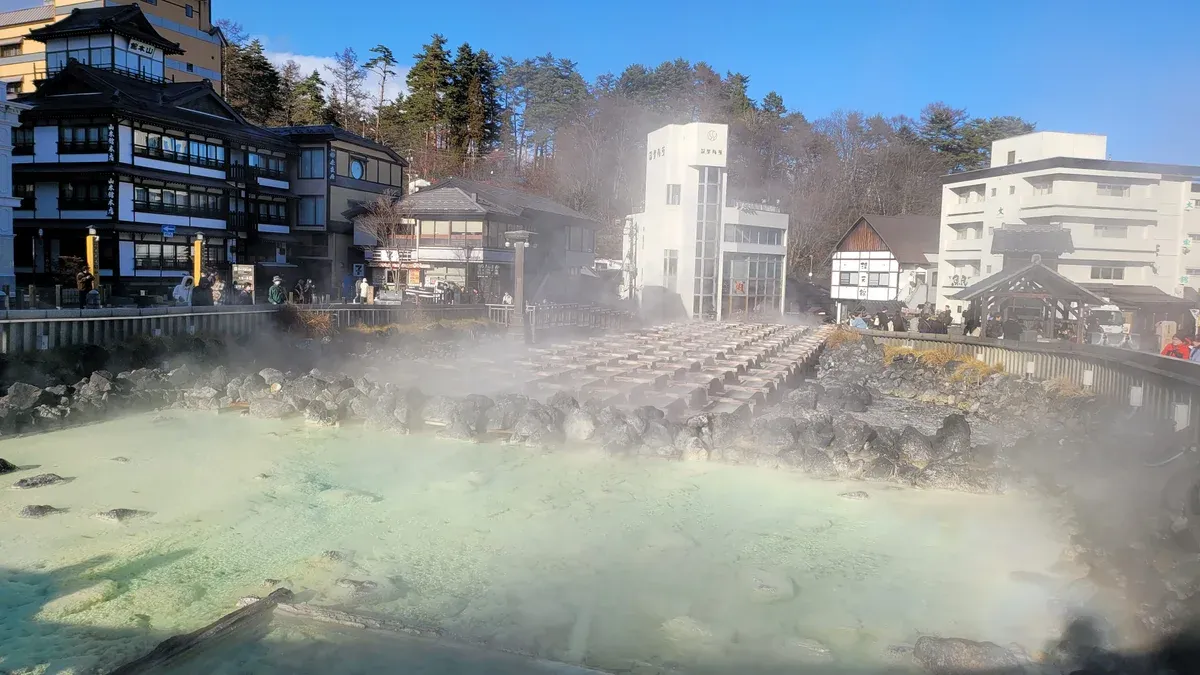
The Yubatake, the town's hot water field, with the wooden cooling chutes behind the pool. Photo: Aspere, CC0, via Wikimedia Commons
What Is the Yubatake?
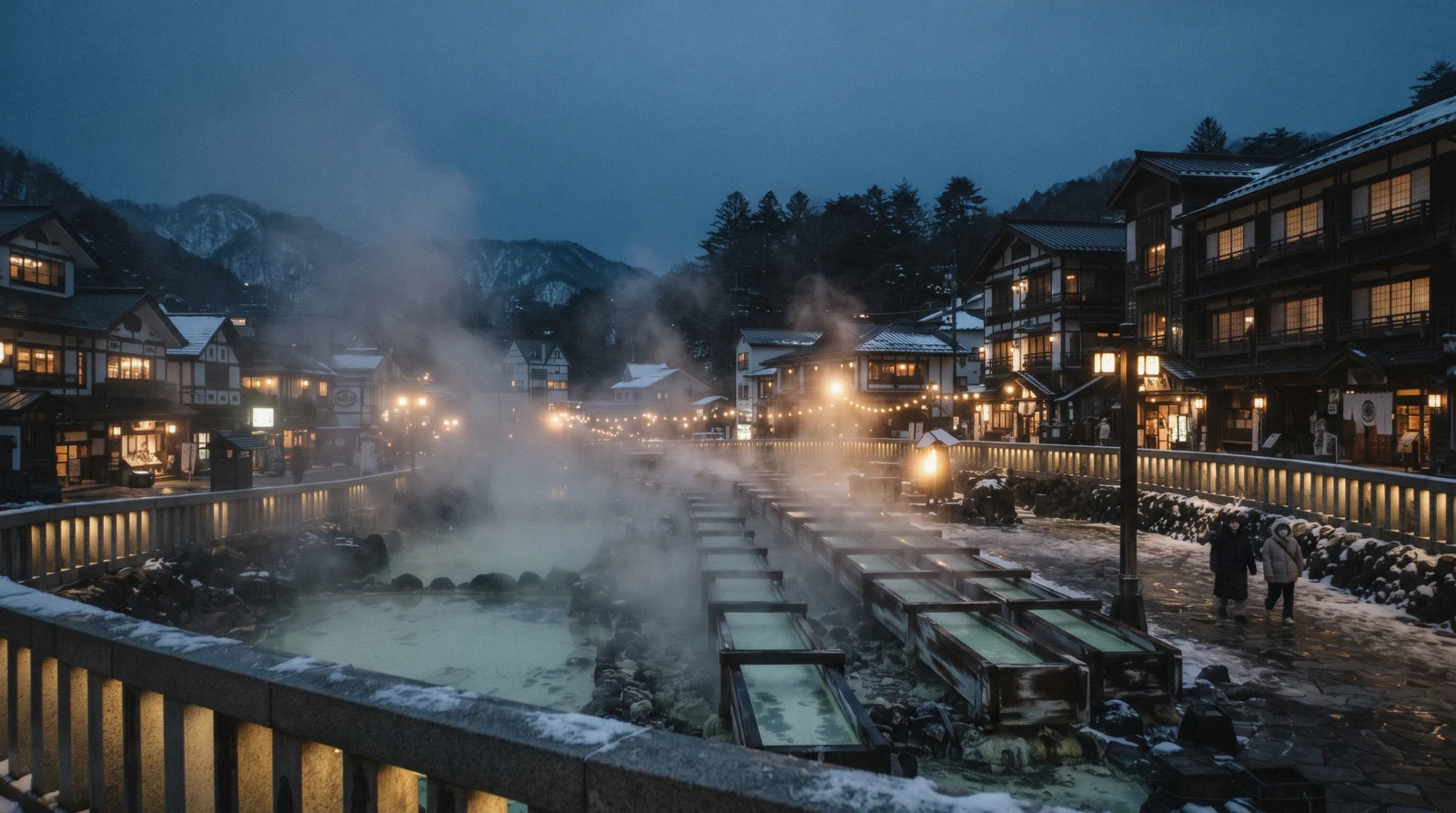
The Yubatake is the hot water field at the centre of Kusatsu, and its source alone delivers 4,000 litres a minute at around 131°F / 55°C. The water runs through a set of long wooden chutes, cooling as it flows while keeping its minerals. It is one of six sources in town.
Beside the field is Netsunoyu, where workers cool the water by stirring it with long wooden planks in time to a folk song. The yumomi show runs six times a day and costs $4 (¥700) for adults.
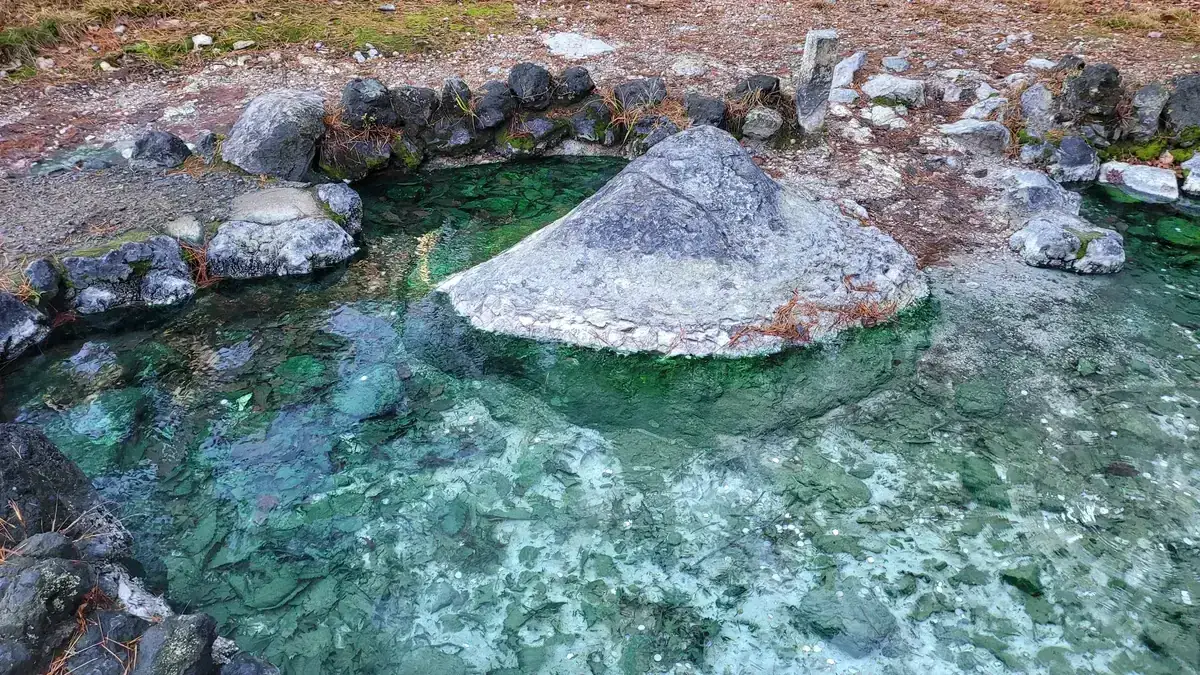
Hot spring water in Sainokawara Park, a 12-minute walk from the centre. Photo: Aspere, CC0, via Wikimedia Commons
Which Public Baths Can You Use in Kusatsu Onsen?
Day visitors can bathe at several baths around town, and the table below gives prices and times for the main ones. Dollar figures use 159 yen to the dollar.
Bath
Adult entry
Hours
Worth knowing
Otakinoyu
$8 (¥1,200), children 3-12 $4 (¥600), towel set $2 (¥250)
9:00-21:00, last entry 20:00
Awase-yu is a series of baths taken in turn from 100°F / 38°C to 115°F / 46°C, cooled naturally not diluted. Cloudy mineral-rich water on the 2nd and 4th Saturday each month.
Sainokawara open-air bath
$5 (¥800), children 3-12 $3 (¥400)
7:00-20:00 to 30 November, 9:00-20:00 from 1 December, last entry 19:30
500 square metres holding up to 100 people. Separate for men and women, mixed on Friday evenings. A 12-minute walk from central Kusatsu.
Netsunoyu yumomi show
$4 (¥700), elementary child $2 (¥350)
Six shows a day: 9:30, 10:00, 10:30, 15:30, 16:00, 16:30
A show, not a bath. Workers cool the water with long wooden planks to a folk song. Winter schedule from 1 December to end of February: 10:00, 10:30, 11:00, 15:30, 16:00, 16:30.
Otakinoyu private Shakunage bath
$13 (¥2,000) per hour rental
Within Otakinoyu hours
Rentable by couples and families, barrier-free.
How Long Does It Take to Get to Kusatsu Onsen From Tokyo?
Allow about 3 hours by limited express train plus bus, or about 4 hours by highway bus from central Tokyo. Kusatsu has no train station, so every rail route ends with a bus ride. The table shows the main options.
Route
Legs
Time
Limited express from Ueno
JR limited express Kusatsu-Shima from Ueno to Naganohara-Kusatsuguchi, then JR bus to Kusatsu
About 2 h 33 min on the train, 25 min bus
Shinkansen via Karuizawa
Hokuriku Shinkansen Tokyo to Karuizawa, then Kusatsu Kotsu or Seibu Kanko bus
About 1 h 10 min on the train, 1 h 18 to 1 h 55 min bus
Highway bus
Joshu Yumeguri-go from Tokyo Station or Busta Shinjuku, plus routes from Shibuya, Ikebukuro, Kichijoji, Yokohama and Omiya
About 4 hours
Local trains via Takasaki
Ueno to Takasaki, Agatsuma Line local to Naganohara-Kusatsuguchi, then bus
About 1 h 45 min plus 1 h 30 min plus 25 min bus
Car
Drive from Tokyo
Around 3 hours
Which Kusatsu Onsen Ryokan Use the Town's Source Water?
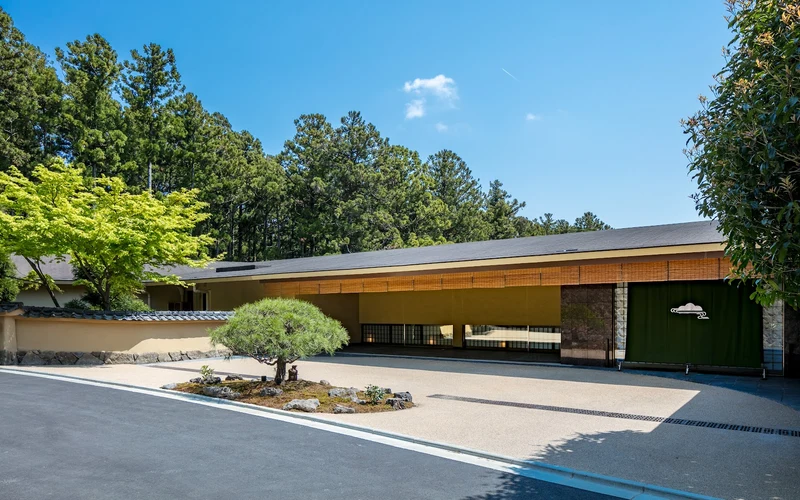
Kusatsu has 6 hot spring sources, and the ryokan that advertise the source water usually name which one they draw from. Hotel Ichii, the closest ryokan to the Yubatake and over 300 years old, uses 2 of the town's 6 sources and runs both kake-nagashi, meaning free-flowing with no recirculation. The slightly cloudy white water of the Shirahata source fills the large bath, and the clear water of the Bandai source, piped from Mount Shirane, fills the open-air bath. Its 23 main-building rooms look over the Yubatake.
Naraya sits beside the Yubatake and was founded in 1877. It bathes in the Shirahata source, said to be the oldest in Kusatsu, piped to the inn down the natural slope of the land.
When a listing says hot spring, ask two things: which source the water comes from, and whether it is kake-nagashi or recirculated. If a ryokan names neither, treat the hot spring claim as unconfirmed. The guide to what counts as a hot springs hotel explains the four things the phrase can mean, and this Kusatsu ryokan search shows every option in town.
Can You Get a Private Onsen in Kusatsu?
Yes. Otakinoyu rents its private Shakunage baths at $13 (¥2,000) an hour for couples and families, and the rooms are barrier-free.
For a bath inside your own room, start with the guide to ryokan with a private onsen. Hakone onsen ryokan are the stronger bet for in-room bathing: five of them put a private onsen in every room.
When to Go to Kusatsu Onsen
Kusatsu is open all year, and winter is its strongest season: the ski resort usually runs from the end of December to the end of March, overnight lows reach around 14°F / -10°C, and the yumomi shows move to their winter schedule of 10:00, 10:30, 11:00, 15:30, 16:00 and 16:30. Summer highs sit around 77°F / 25°C, a relief compared with Tokyo.
With a car and the mountain road open, add a side trip to Manza Onsen, a village 1,800 m up Mount Kusatsu-Shirane that Japan Guide describes as having Japan's most sulfuric waters.
Kusatsu Onsen vs Hakone, Kinosaki and Beppu
Hot Spring Stays has no Kusatsu hotel page yet, so the ryokan compared in detail come from the three onsen towns it does cover. The table sets Kusatsu against them.
Onsen town
From Tokyo
Why go
Our guide
Kusatsu
About 3 hours
Largest natural outflow in Japan, pH 2.1 acid water, 13 public baths
No page yet
Hakone
See guide
Closest of the three to Tokyo, five ryokan with a private onsen in every room
Hot Spring Stays has no Kusatsu location page yet, so these are the onsen ryokan with source water on site from the three Japanese towns this guide to hot springs hotels compares: Hakone, Kinosaki and Beppu.
Kannawa source water. The operator advertises 100% source-flowing baths in the rooms, and calls the communal Hono-yu water shinpi no aoyu, "mysterious blue water"
Room includes
Room tub plus the communal bathhouse. No published day-bathing rate was found, so treat the water as guests-only
Sanso Kannawaen has 100% source-flowing baths in the rooms.
Yes. It has the largest natural hot spring outflow in Japan at 32,300 litres a minute, acid water at pH 2.1, 13 public baths and a walkable centre built around the Yubatake.
How long does it take to get to Kusatsu Onsen from Tokyo?
About 3 hours by limited express train from Ueno plus a 25-minute bus, about 4 hours by Joshu Yumeguri-go highway bus, or around 3 hours by car. There is no train station in Kusatsu.
What are the top 3 onsen towns in Japan?
There is no official ranking. Kusatsu claims the largest natural outflow in Japan, and the three towns we compare in detail are Hakone, Kinosaki and Beppu.
Why can't you wear clothes in an onsen?
Bathers wash first and enter the shared water without swimwear so the water stays clean for everyone. If that is uncomfortable, the private Shakunage bath at Otakinoyu in Kusatsu is rentable at $13 (¥2,000) an hour.
Where should I stay in Kusatsu Onsen?
The two ryokan that publish their source water by name sit beside the Yubatake: Hotel Ichii with two free-flowing sources, and Naraya on the oldest source in town. For ryokan compared side by side, see the stays with their own water below.